

SoundQubed
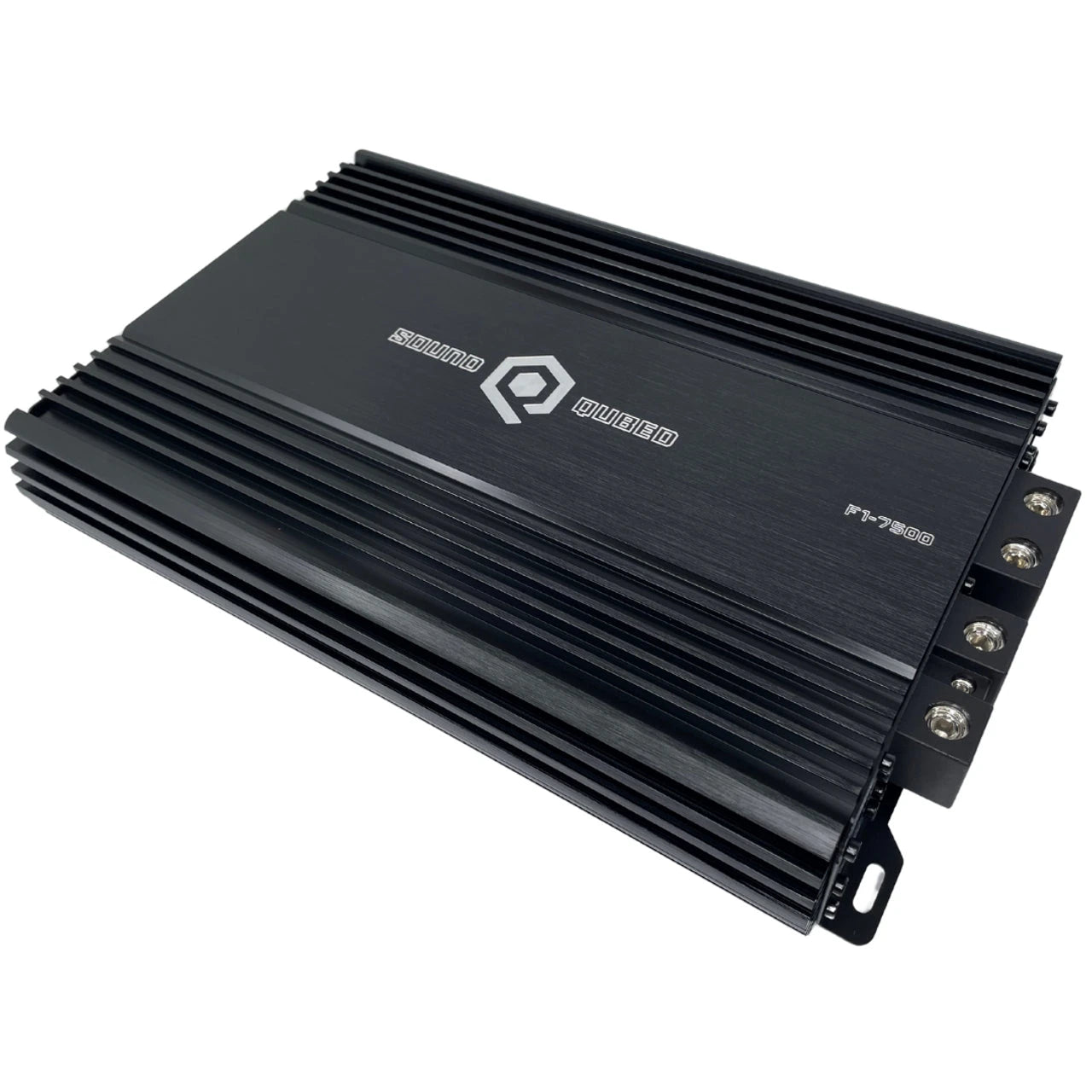
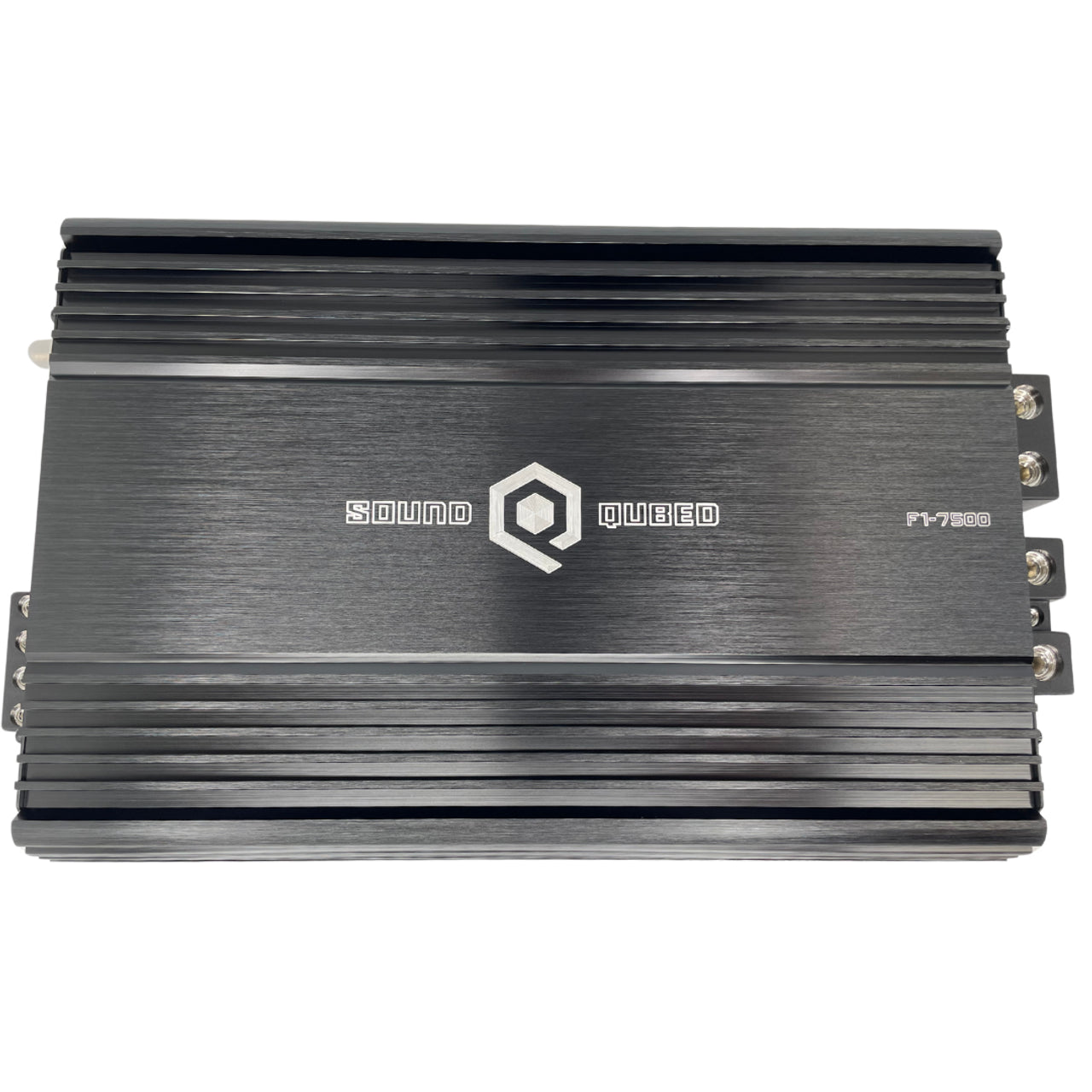
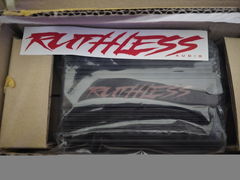
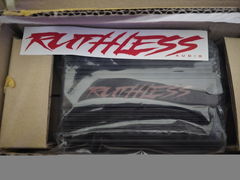
SoundQubed 7500 Watts F1-7500 Full Bridge Mono Block Amplifier
SoundQubed 7500 Watts F1-7500 Full Bridge Mono Block Amplifier
Couldn't load pickup availability
SoundQubed 7500 Watts F1-7500 Full Bridge Mono Block Amplifier
Sold by AudioSellerz.com
The SoundQubed 7500 Watts F1-7500 Full Bridge Mono Block Amplifier is a SoundQubed full-bridge monoblock subwoofer amplifier for a system built around the exact power ratings, impedance limits, channel layout, wiring, and electrical requirements listed below.
Use the model name F1-7500 when comparing SoundQubed amplifiers. Do not choose an amplifier from the largest wattage number alone; match continuous output at the intended load, the connected speakers or subwoofers, power and ground wire, fuse protection, battery support, alternator capacity, airflow, and gain settings.
Original Product Details and Specifications
SoundQubed F1-7500 7500W Full-Bridge Monoblock Amplifier
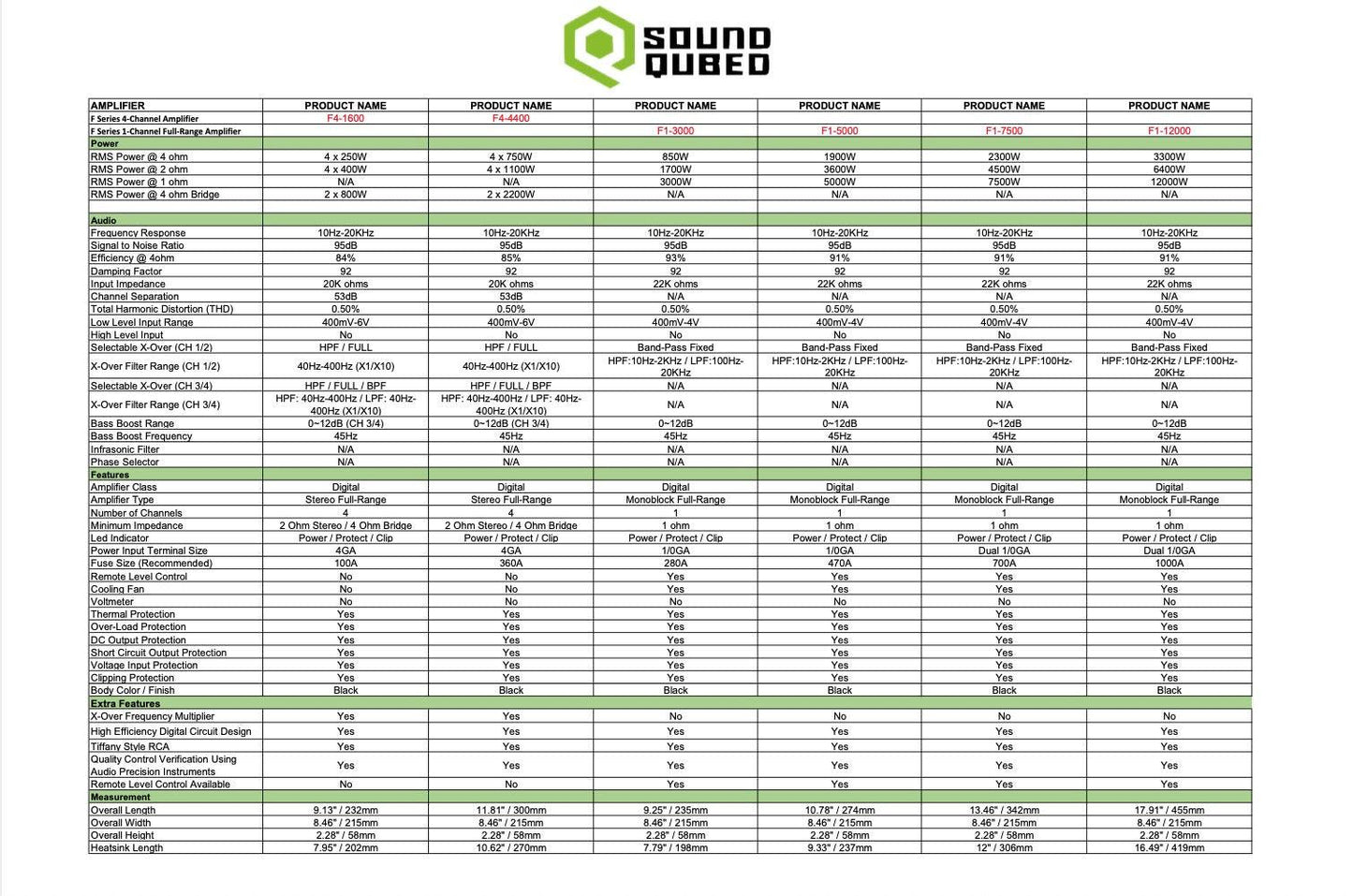
The SoundQubed F1-7500 full-bridge monoblock amplifier delivers up to 7,500 watts RMS at 1 ohm for serious high-output subwoofer systems. With 4,500 watts RMS available at 2 ohms and 2,300 watts RMS at 4 ohms, the F1-7500 gives experienced car audio builders several ways to match powerful subwoofers, voice-coil configurations and electrical systems.
This is not an entry-level bass amplifier or a product intended to be connected to a factory electrical system without extensive planning. SoundQubed specifically states that the F1-7500 is not for vehicles relying on a stock alternator with no additional power-supply bank.
The subwoofers, final wired impedance, enclosure, power wire, ground wire, fuse protection, battery bank, alternator output and charging voltage all need to be designed around the amplifier’s substantial electrical demand.
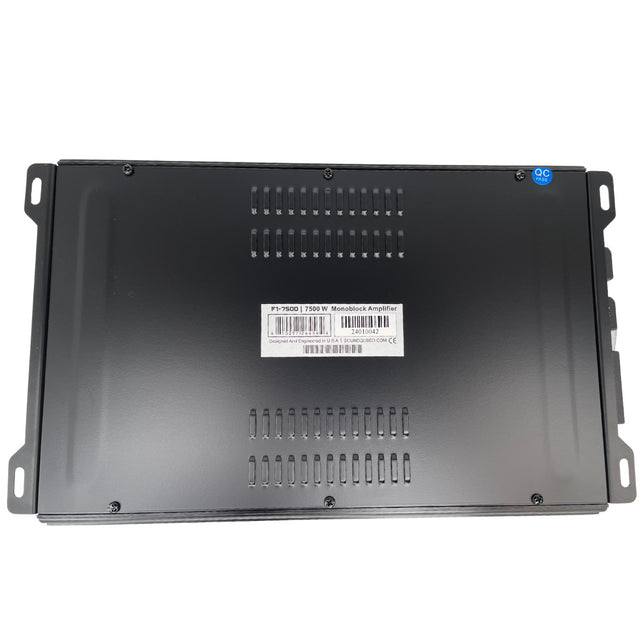
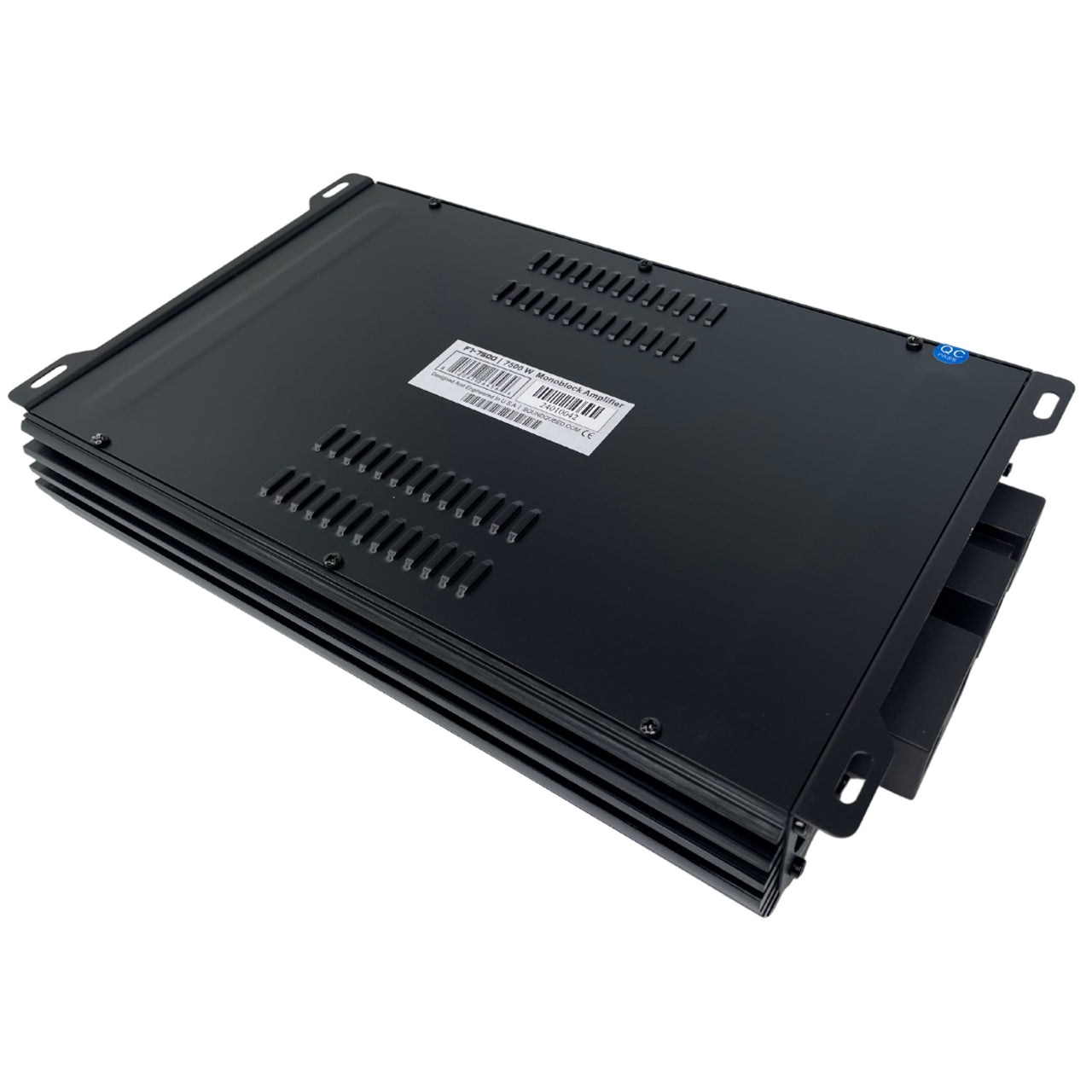
Despite its high output, the F1-7500 measures approximately 13.46" long x 8.46" wide x 2.28" tall. Its compact full-bridge platform gives builders serious bass power without requiring the physical footprint associated with many traditional high-power amplifiers.
SoundQubed F1-7500 Power Ratings and Specifications
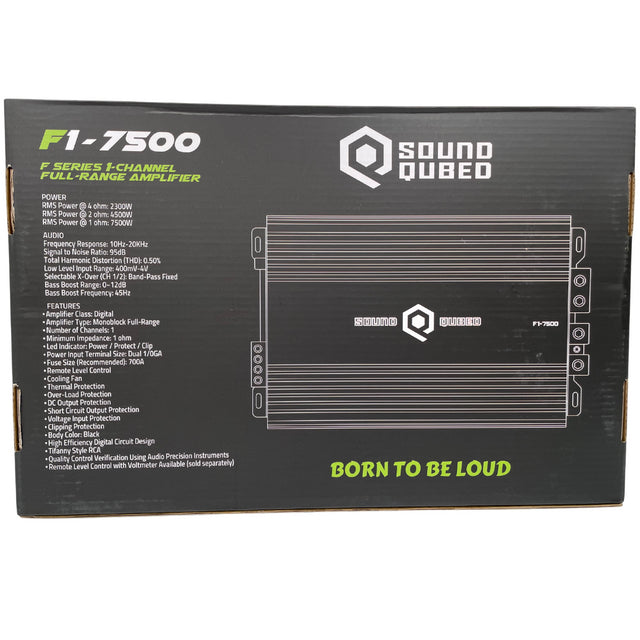
- RMS power at 4 ohms: 2,300 watts
- RMS power at 2 ohms: 4,500 watts
- RMS power at 1 ohm: 7,500 watts
- Amplifier type: Full-bridge monoblock amplifier
- Minimum rated impedance: 1 ohm
- Dimensions: 13.46" long x 8.46" wide x 2.28" tall
- Model: F1-7500
- SKU: SQ-F1-7500
- Series: SoundQubed F-Series
7500-Watt Monoblock Amplifier at 1 Ohm
The SoundQubed F1-7500 1-ohm monoblock amplifier is rated to produce 7,500 watts RMS when connected to a correctly wired 1-ohm subwoofer load and supplied with adequate electrical power.
A 1-ohm configuration may be created with one or more compatible dual voice-coil subwoofers. The correct wiring arrangement depends on:
- The voice-coil impedance of each subwoofer
- The total number of subwoofers
- Whether the coils are wired in series or parallel
- The combined RMS power handling
- The amplifier’s safe minimum impedance
Before connecting the F1-7500 at 1 ohm, verify:
- The exact final wired impedance
- The combined subwoofer RMS rating
- The enclosure requirements for every subwoofer
- The power and ground wire capacity
- The main fuse and distribution fuse sizes
- The battery-bank capacity
- The alternator’s available output
- The vehicle’s operating voltage under load
Do not connect the amplifier below its rated 1-ohm minimum impedance. Running below the rated load can greatly increase current demand and heat while causing protect mode, blown fuses, unstable operation or amplifier failure.
Use the Audio Sellerz amplifier and subwoofer ohm-load wiring guide before connecting the subwoofers.
4500 Watts RMS at 2 Ohms
At 2 ohms, the SoundQubed F1-7500 is rated for 4,500 watts RMS.
A 2-ohm configuration can provide substantial bass power without operating the amplifier at its lowest rated impedance. It may be the correct choice when the selected voice coils naturally create a 2-ohm final load or when the subwoofer system does not need the complete 7,500-watt rating.
Running the F1-7500 at 2 ohms may make sense when:
- The combined subwoofer RMS rating matches approximately 4,500 watts
- The selected voice coils create a safe 2-ohm load
- The customer wants strong output without using the amplifier’s maximum rating
- The electrical system is designed for the planned 2-ohm output
- The build may receive different subwoofers later
- The system is intended for demanding daily use rather than maximum 1-ohm output
The amplifier does not need to be wired at 1 ohm simply because it can operate there. The correct load is the one that safely matches the subwoofers, electrical system and intended use.
2300 Watts RMS at 4 Ohms
At 4 ohms, the F1-7500 produces 2,300 watts RMS.
That is still enough power for many serious single-subwoofer and dual-subwoofer systems. A 4-ohm configuration may be useful when the selected voice coils create that load or when the customer wants to operate the amplifier at a lighter impedance.
Running at 4 ohms may also provide room for future growth. The customer can later change the subwoofer configuration and use more of the amplifier’s available output, provided the enclosure, wiring and electrical system are upgraded to support the change.
Do not choose subwoofer voice coils only to reach the largest advertised wattage number. Select the voice-coil configuration according to the number of subwoofers and the final impedance needed by the complete build.
Serious Electrical Support Is Required
A 7,500-watt car audio amplifier creates major electrical demand. SoundQubed specifically warns that the F1-7500 is not intended for a stock alternator with no additional power-supply banks.
A properly planned F1-7500 electrical system may require:
- A high-output alternator
- A properly sized battery bank
- Upgraded positive charging cables
- Upgraded engine and chassis grounds
- A complete Big 3 wiring upgrade
- Multiple runs of large OFC power wire
- Matching ground-wire capacity
- Correctly sized fuse protection
- Heavy-duty distribution hardware
- Voltage monitoring under load
The exact electrical requirements depend on the charging voltage, listening habits, connected impedance, other amplifiers in the vehicle and how long the system will be played at high output.
Do not plan the electrical system only around the amplifier’s physical terminal size. The wire and battery capacity must support the actual current demand.
Read the Audio Sellerz step-by-step car audio electrical upgrade guide before installing the F1-7500.
High-Output Alternator Requirements
The factory alternator in most vehicles was designed to support factory electronics, lighting, climate controls, ignition systems and normal vehicle operation. It was not designed to supply a large aftermarket amplifier producing thousands of watts.
A properly selected high-output alternator can help provide the charging current required to support the battery bank and amplifier while the engine is running.
Alternator planning should consider:
- The F1-7500 amplifier
- Any additional mids-and-highs amplifiers
- The vehicle’s factory electrical demand
- The normal charging voltage
- Alternator output at idle and driving speed
- The battery chemistry being used
- How long the system will be played at high volume
A large battery bank cannot permanently replace the charging current the system consumes. The alternator and batteries need to work together.
Battery-Bank Support for the SoundQubed F1-7500
The F1-7500 should be supported by a battery system designed for the amplifier’s current demand and the vehicle’s charging voltage.
Battery planning should consider:
- Total usable battery capacity
- Battery chemistry
- Required charging voltage
- Maximum safe operating voltage
- Alternator compatibility
- Power and ground cable capacity
- Fuse protection between electrical components
- Whether batteries are installed under the hood, in the rear or in both locations
Do not mix battery chemistries or charging requirements without understanding how the complete system will operate. Every battery, charger, alternator and amplifier must be compatible with the planned voltage range.
Power Wire for the F1-7500
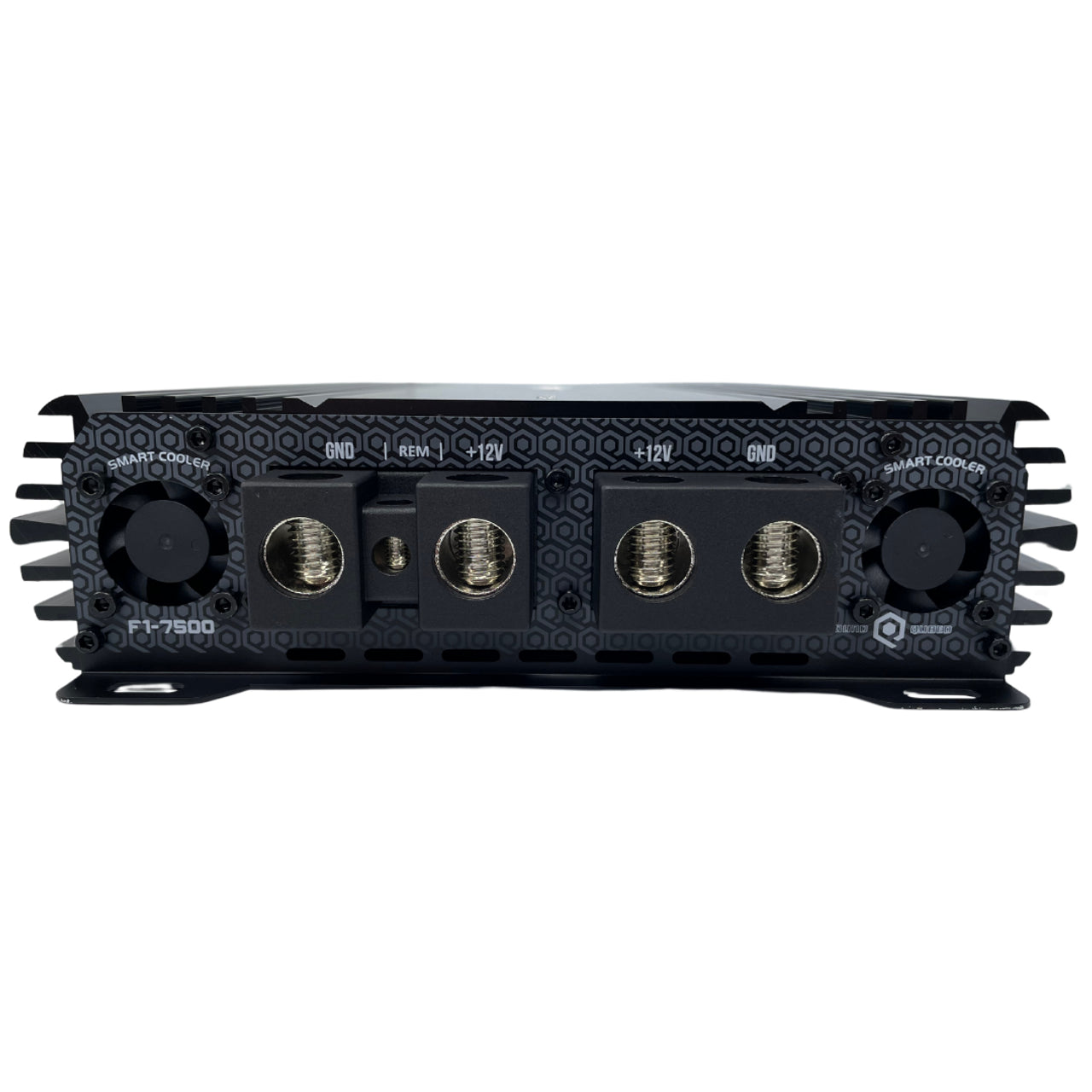
The F1-7500 requires serious power-wire capacity. A single basic amp kit should not automatically be assumed sufficient for a system at this power level.
The correct power-wire configuration depends on:
- The expected amplifier current demand
- The length of each wire run
- OFC or CCA construction
- The number of positive cable runs
- The operating voltage
- The battery-bank location
- The addition of other amplifiers
Large systems commonly use multiple runs of power and ground cable rather than relying on one undersized connection.
Customers can browse available SoundQubed amp kits and car audio wire when planning the supporting installation.
The Audio Sellerz car audio wire gauge and fuse guide explains how cable material, length, amplifier demand and fuse protection work together.
Ground Wire and Grounding for the F1-7500
The ground side of the system needs enough capacity to return the same current supplied through the positive cables.
A large positive wire cannot overcome a weak, undersized or poorly connected ground.
The F1-7500 grounding system should include:
- Ground-wire capacity matched to the positive wiring
- Short amplifier ground connections when practical
- Clean and secure metal connections
- Upgraded battery-to-chassis grounds
- Upgraded engine-to-chassis grounds
- Secure battery-bank connections
- Protection against corrosion and loosening
- Voltage-drop testing under load
Poor grounds can contribute to:
- Reduced amplifier output
- Unstable voltage
- Excessive heat
- Protect mode
- Burned terminals
- Damaged cables
- Noise and inconsistent performance
Read the car audio grounding guide for building a better amplifier ground.
Fuse Protection for a 7500-Watt Amplifier System
Every positive cable connected to a battery or charging source needs appropriate fuse protection.
The fuse is installed primarily to protect the wire if the cable becomes damaged or shorts to the vehicle. An unfused cable connected to a large battery bank can release extreme current and create a serious fire risk.
Fuse planning should account for:
- The current capacity of each cable
- The number of power-wire runs
- The battery locations
- The alternator charging cable
- Power distribution points
- Additional amplifiers
- The total system design
Never install a fuse larger than the connected wire can safely support. Large systems may require separate fusing at multiple locations throughout the vehicle.
Compact Full-Bridge Amplifier Design
The SoundQubed F1-7500 measures approximately 13.46" long x 8.46" wide x 2.28" tall.
The full-bridge design allows SoundQubed to provide substantial output from a chassis that remains manageable for a high-power amplifier.
The compact footprint can help with:
- Custom amplifier racks
- Multi-amplifier installations
- Pickup trucks
- Hatchbacks and SUVs
- Street and demo vehicles
- Builds where the battery bank already consumes significant space
The compact chassis does not eliminate the need for ventilation. High-output amplifiers generate heat and should be installed where air can move around the heat sink.
Avoid mounting the F1-7500:
- Under loose carpet
- Inside an unventilated sealed compartment
- Against soft material that blocks the heat sink
- Where water or condensation can reach it
- Where cargo can damage the terminals
- Where seat tracks or moving parts can contact the amplifier
Enlarged Heat-Sink Design
SoundQubed designed the F-Series with an enlarged heat sink to improve heat transfer from the amplifier’s compact chassis.
Proper cooling still depends on the installation. Restricted airflow, low voltage, unsafe impedance and excessive clipping can all increase amplifier temperature.
Help manage amplifier heat by:
- Providing open space around the chassis
- Maintaining stable electrical voltage
- Using the correct subwoofer impedance
- Setting gain correctly
- Avoiding prolonged clipped output
- Keeping terminals tight and free from corrosion
- Using active ventilation when the amplifier rack requires it
Optional Temperature and Voltage Readout
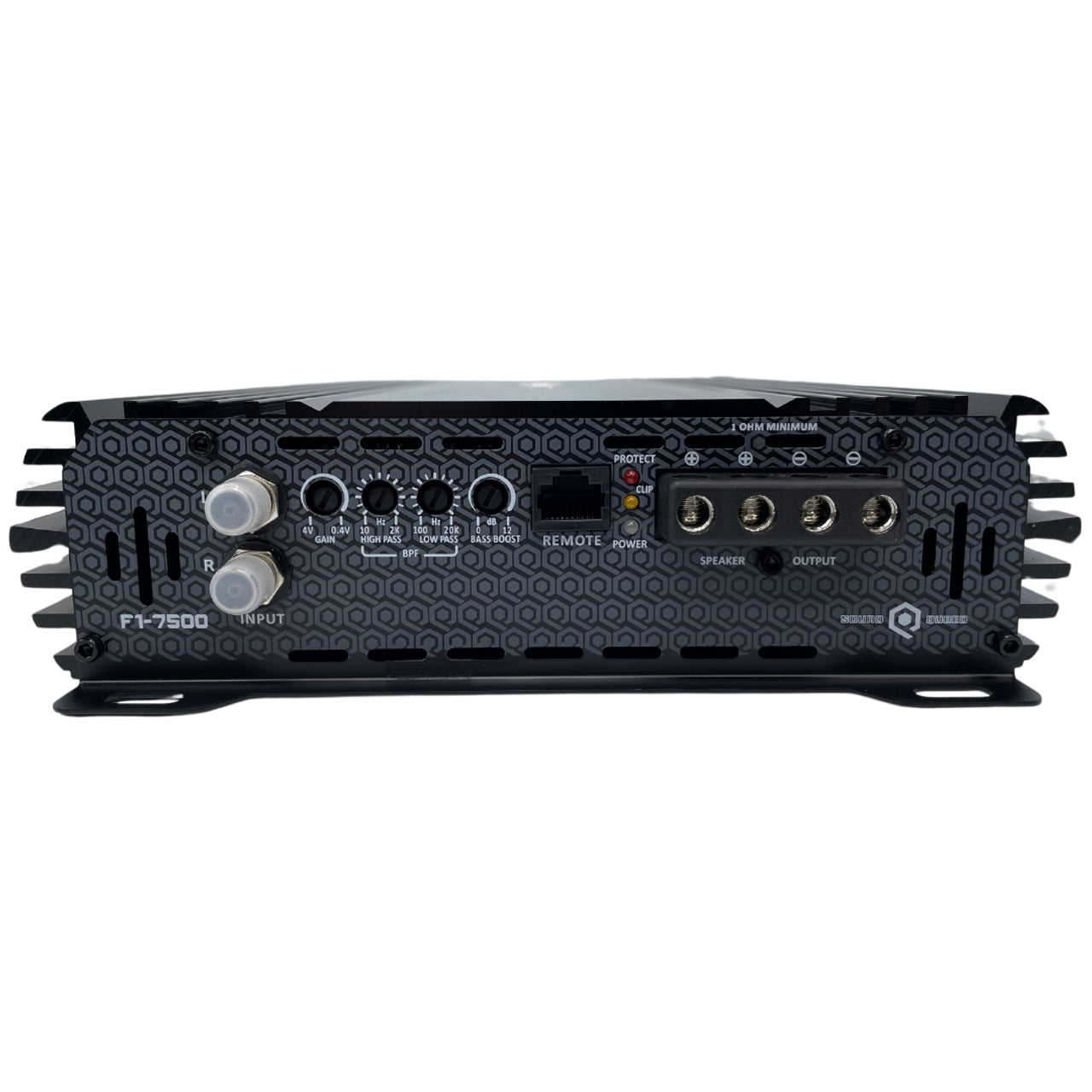
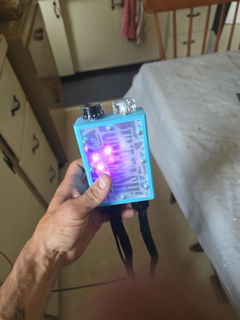
SoundQubed describes the F-Series as compatible with an optional bass knob that can provide temperature and voltage information.
Monitoring voltage is especially valuable in a high-power F1-7500 system because voltage drop can reduce output, increase current demand and contribute to amplifier protect mode.
A voltage display does not replace proper testing, but it can help the user see how the electrical system is behaving while the amplifier is operating.
Because the readout is described as optional, review the exact included accessories before ordering and purchase the compatible control separately when needed.
Match the F1-7500 With the Correct Subwoofers
The F1-7500 should be matched to subwoofers according to their combined RMS power handling, voice-coil configuration and final wired impedance.
Before selecting subwoofers, confirm:
- The verified RMS rating of each subwoofer
- The voice-coil impedance
- The total number of subwoofers
- The final wired load
- The recommended enclosure specifications
- The amount of electrical support available
- The normal operating voltage
- How hard and how long the system will be played
Peak and maximum-power numbers should not be used as the primary method of matching subwoofers to the amplifier.
A subwoofer system with a combined RMS rating near the amplifier’s intended output can be a starting point, but wattage alone does not guarantee a correct match. The enclosure, impedance rise, voltage, signal, gain setting and listening habits all affect the power reaching the subwoofers.
Browse the SoundQubed subwoofer collection to compare available sizes, series, voice-coil options and RMS ratings.
SoundQubed HDX Subwoofers and the F1-7500
The F1-7500 may be considered for large SoundQubed HDX systems when the combined subwoofer power handling and final impedance match the amplifier configuration.
An HDX system built around this amplifier may require:
- One or more high-power SoundQubed subwoofers
- A properly designed enclosure
- Large power and ground wiring
- A high-output alternator
- A substantial battery bank
- Correct fuse protection
- Stable voltage under load
- Proper gain and crossover settings
Do not assume that every SoundQubed subwoofer is automatically suitable for a 7,500-watt amplifier. Verify the exact model, RMS rating and voice-coil configuration before building the system.
One Large Subwoofer or Multiple Subwoofers?
The F1-7500 can power one extremely capable subwoofer or several compatible subwoofers when the total impedance and combined RMS handling are matched properly.
One Subwoofer May Make Sense When:
- The system is centered around one high-power subwoofer
- Enclosure space is limited
- The desired final impedance can be reached with one subwoofer
- The customer wants a simpler wiring configuration
- The enclosure is designed specifically around that subwoofer
Multiple Subwoofers May Make Sense When:
- The customer wants more cone area
- The vehicle has enough enclosure space
- The combined voice coils create the correct load
- The total RMS handling matches the amplifier
- The electrical system can support the planned output
More subwoofers do not automatically create a better system. One properly powered subwoofer in the correct enclosure can outperform several subwoofers installed in the wrong box or supplied with unstable voltage.
The Subwoofer Enclosure Is Critical
A 7,500-watt amplifier cannot correct a poorly designed enclosure.
The subwoofer box affects:
- Frequency response
- Low-frequency extension
- Output and efficiency
- Cone control
- Mechanical stress
- Impedance behavior
- How the bass loads inside the vehicle
- How effectively the subwoofers use amplifier power
The enclosure should be built around the exact subwoofer model, number of subwoofers, usable internal air space, displacement, port area and tuning requirements.
Large high-output systems also need strong construction, secure mounting and enough structural support to handle substantial pressure and enclosure weight.
Read the Audio Sellerz subwoofer box guide before choosing or building an enclosure for the F1-7500 system.
Browse available car audio subwoofer boxes and enclosures for additional system options.
Set the F1-7500 Gain Correctly
Amplifier gain is not a volume or wattage control.
The gain setting is used to match the amplifier’s input sensitivity to the signal coming from the radio, DSP or line-output converter.
Setting gain too high can create:
- Clipping
- Distorted bass
- Excessive current demand
- Overheated subwoofer voice coils
- Amplifier overheating
- Protect-mode problems
- Premature equipment failure
Do not increase gain to compensate for weak voltage, the wrong enclosure, a weak input signal or subwoofers that do not match the amplifier.
Use the Audio Sellerz guide to setting amplifier gain for subwoofers before tuning the completed system.
Monitor Voltage Under Load
Voltage should be monitored while the system is operating under real load—not only while the vehicle is idling with the amplifier turned down.
Low voltage can contribute to:
- Reduced amplifier output
- Increased current demand
- Excessive heat
- Clipping
- Protect mode
- Battery damage
- Alternator stress
- Burned or damaged terminals
The safe voltage range depends on the amplifier, battery chemistry, alternator and complete electrical design. Do not raise charging voltage without confirming that every connected component can operate safely at that voltage.
Using the F1-7500 With a Mids-and-Highs Amplifier
A complete high-output car audio system commonly uses:
- A monoblock amplifier for the subwoofer system
- A multi-channel amplifier for mids, highs and door speakers
The F1-7500 can create enough bass output that the rest of the speaker system may need considerable power to remain clear and balanced.
When adding another amplifier, calculate the combined electrical demand of the entire system. The alternator, batteries, power wire, grounds, distribution blocks and fuse protection must support all amplifiers together.
Browse SoundQubed amplifiers for subwoofers, mids and highs when planning the complete setup.
Who Should Buy the SoundQubed F1-7500?
The SoundQubed F1-7500 may be a strong choice for experienced customers building:
- A serious high-output daily-driver system
- A powerful street bass build
- A demo-oriented subwoofer system
- A large SoundQubed HDX subwoofer setup
- A compact high-power amplifier rack
- A 4-ohm system needing up to 2,300 watts RMS
- A 2-ohm system needing up to 4,500 watts RMS
- A 1-ohm system needing up to 7,500 watts RMS
- A vehicle already receiving major electrical upgrades
The F1-7500 is not the correct amplifier for most basic entry-level bass systems. Customers should account for the complete cost of the subwoofers, enclosure, alternator, battery bank, wiring, fusing and installation before selecting it.
Why Buy the SoundQubed F1-7500 From Audio Sellerz?
Audio Sellerz is a real brick-and-mortar car audio shop in Norton, Ohio.
We understand that choosing a high-power monoblock amplifier involves far more than comparing wattage numbers.
The amplifier needs to work with:
- The subwoofer RMS ratings
- The voice-coil configurations
- The final wired impedance
- The enclosure design
- The power and ground wiring
- The battery bank
- The alternator
- The fuse protection
- The signal, crossover and gain settings
When you purchase the SoundQubed F1-7500 from Audio Sellerz, you are buying from people who understand daily-driver bass systems, high-output builds and the electrical support required to operate a large amplifier correctly.
Learn more about our relationship with the company in the article explaining why Audio Sellerz sells and supports SoundQubed.
You can also browse the complete SoundQubed car audio collection at Audio Sellerz.
SoundQubed F1-7500 Frequently Asked Questions
How much power does the SoundQubed F1-7500 make?
The F1-7500 is rated for 2,300 watts RMS at 4 ohms, 4,500 watts RMS at 2 ohms and 7,500 watts RMS at 1 ohm.
Is the SoundQubed F1-7500 a full-bridge amplifier?
Yes. The F1-7500 is part of SoundQubed’s F-Series full-bridge monoblock amplifier lineup.
Is the SoundQubed F1-7500 stable at 1 ohm?
Yes. SoundQubed rates the F1-7500 for 7,500 watts RMS at 1 ohm. It should not be connected below its rated 1-ohm minimum impedance.
Can the F1-7500 run at 2 ohms?
Yes. It is rated for 4,500 watts RMS at 2 ohms.
Can the F1-7500 run at 4 ohms?
Yes. It is rated for 2,300 watts RMS at 4 ohms.
How large is the SoundQubed F1-7500?
The amplifier measures approximately 13.46" long x 8.46" wide x 2.28" tall.
Can I run the F1-7500 on a stock alternator?
SoundQubed specifically states that this amplifier is not intended for a stock alternator without additional power-supply banks. A proper high-output electrical system should be planned before installation.
Does the F1-7500 require a battery bank?
A high-output system using the F1-7500 will normally require additional battery capacity designed around the amplifier demand, charging voltage and alternator output.
What subwoofers should I use with the F1-7500?
Choose subwoofers according to their combined RMS rating, voice-coil configuration, enclosure requirements and final wired impedance. The correct match depends on whether the amplifier will operate at 4 ohms, 2 ohms or 1 ohm.
Can the F1-7500 power two subwoofers?
Yes, provided the combined voice coils create a safe final load and the subwoofers have suitable combined RMS power handling for the amplifier’s output.
Can the F1-7500 power one subwoofer?
Yes. It can power one compatible high-output subwoofer when the voice coils create a safe final load and the subwoofer is built to handle the intended amplifier output.
What wire should I use with the F1-7500?
The correct wire configuration depends on current demand, cable length, conductor material, operating voltage and the rest of the system. A build at this level may require multiple runs of large OFC power and ground wire.
Does the F1-7500 need a Big 3 upgrade?
A Big 3 upgrade should be part of the planning for a system at this level, but it does not create additional alternator output. A high-output alternator, battery bank and additional wiring may still be required.
Does the F1-7500 include a temperature and voltage display?
SoundQubed describes an optional compatible bass-knob setup with temperature and voltage readout. Review the included accessories before ordering because optional controls may be sold separately.
Match This SoundQubed Amplifier to the System
Use the continuous power ratings at the intended impedance, minimum stable load, channel configuration, crossover controls, input signal, fuse requirements, power-wire size, ground path, ventilation, and vehicle electrical support. This amplifier should be matched to one or more subwoofers at a safe final impedance according to the original specifications.
Shop SoundQubed Amplifiers and Supporting Products
Compare the complete SoundQubed amplifier collection, browse more monoblock car audio amplifiers, and review the SoundQubed SK1 F-Series bass knob and monitor when the exact amplifier supports it.
Helpful SoundQubed Amplifier Guides
Compare the models in the SoundQubed F-Series amplifier guide. Use the guide to wiring an amplifier to the correct ohm load, verify power wire and fusing with the car audio wire-gauge and fuse guide, and create a dependable return path with the amplifier grounding guide.
Set the system up with the amplifier gain guide for subs, mids, and highs. If the amp shuts down, use the amplifier protect-mode troubleshooting guide before replacing equipment by guesswork.
Shop SoundQubed at Audio Sellerz
Browse the complete SoundQubed car audio collection at Audio Sellerz for SoundQubed subwoofers, amplifiers, speakers, tweeters, wiring, deadener, and system accessories. Read why Audio Sellerz sells and supports SoundQubed to learn more about the brand relationship and the product categories we carry.
Frequently Asked Questions About SoundQubed 7500 Watts F1-7500 Full Bridge Mono Block Amplifier
What should this SoundQubed amplifier power?
Match the amplifier channel layout, RMS output, impedance ratings, and crossover controls to the connected speakers or subwoofers. Confirm the complete model specifications before ordering.
What power wire and fuse does it need?
Use the amplifier's published current and fuse requirements, total power-wire length, conductor material, installation temperature, and electrical-system design. Do not choose wire from the model name alone.
Does a larger amplifier require electrical upgrades?
It may. Measure voltage under load and evaluate the power wire, ground, fuse holder, battery reserve, Big 3 wiring, and alternator output as one electrical system.
Follow Audio Sellerz
Stay connected with Audio Sellerz for new products, car audio builds, install videos, demos, and updates:
Follow Audio Sellerz on Facebook
Follow Audio Sellerz on Instagram
Follow Audio Sellerz on TikTok
Subscribe to Audio Sellerz on YouTube
Share