Fuse Blocks
-
Audio Sellerz Economy 2 Spot Fuse Block
Vendor:Audio SellerzRegular price $30.00 USDRegular price -
Audio Sellerz Economy 3 Spot Fuse Block
Vendor:Audio SellerzRegular price $45.00 USDRegular price -
Audio Sellerz Economy Mini ANL FuseBlock Single Spot
Vendor:Audio SellerzRegular price $15.00 USDRegular price -
Audio Sellerz Economy Single Fuse Block
Vendor:Audio SellerzRegular price $15.00 USDRegular price




-
 Audio Sellerz Economy 2 Spot Fuse BlockAudio Sellerz Economy 2-Spot Fuse Block Sold by AudioSellerz.com, the Audio Sellerz Economy 2-Spot Fuse Block is a cl...$30.00
 -
 Audio Sellerz Economy 3 Spot Fuse BlockAudio Sellerz Economy 3-Spot Fuse Block Sold by AudioSellerz.com, the Audio Sellerz Economy 3-Spot Fuse Block is a cl...$45.00
 -
 Audio Sellerz Economy Mini ANL FuseBlock Single SpotWe are back with yet ANOTHER awesome looking fuse block, this time geared towards our biker friends. We seen they are...$15.00
 -
 Audio Sellerz Economy Single Fuse BlockAudio Sellerz Economy Single Fuse Block Sold by AudioSellerz.com, the Audio Sellerz Economy Single Fuse Block is a cl...$15.00


Fuse Blocks
Sold by AudioSellerz.com
Shop car audio fuse blocks and fuse holders for amplifier power wiring, batteries, Big 3 upgrades, high-output alternators, multi-amp systems and custom electrical builds. Proper fuse protection helps protect the power wire and vehicle when a short or electrical fault occurs.
Audio Sellerz carries single fuse blocks, multi-spot fuse blocks, Mini ANL fuse holders and fused power-distribution options for daily drivers, amp racks, motorcycles, high-power systems and competition-style car audio builds.
Shop Car Audio Wire | Shop Power & Ground Wire | Shop Amp Kits | Shop Big 3 Kits
Car Audio Fuse Blocks
A car audio fuse block gives one or more high-current power circuits a clean place for fuse protection.
Fuse blocks are commonly used with:
- Monoblock amplifiers
- 4-channel amplifiers
- Multi-amplifier systems
- Subwoofer systems
- Amplifier racks
- Battery upgrades
- Big 3 wiring
- High-output alternators
- Secondary batteries
- Custom power-distribution layouts
The exact fuse block should be chosen around the cable size, fuse type, number of circuits and electrical layout.
Why Car Audio Power Wire Needs Fuse Protection
Aftermarket amplifier wiring can carry substantial electrical current. If a positive power cable is damaged and contacts vehicle metal, the wire can carry very high fault current.
Proper fuse protection helps protect the cable by opening the circuit when current exceeds the fuse rating.
The fuse should be selected to protect the wiring and installed according to the wiring layout, fuse-holder requirements and equipment manufacturer's recommendations.
A fuse is not a substitute for:
- Correct wire size
- Secure terminals
- Proper grounding
- Protected cable routing
- Good battery connections
- Correct amplifier installation
Car Audio Fuse Holders
A car audio fuse holder secures the fuse and creates a protected connection in the positive power circuit.
Fuse holders are commonly installed on:
- Battery-to-amplifier power runs
- Secondary battery wiring
- High-output charging cables
- Big 3 wiring where the system design calls for fuse protection
- Multi-amp power systems
The holder needs to match the fuse style and wire size being used.
Fuse Holder for an Amplifier
A fuse holder for an amplifier is normally installed on the main positive power cable feeding the amplifier or amplifier distribution system.
When planning the fuse holder, check:
- Power-wire gauge
- OFC or CCA conductor material
- Fuse type
- Fuse rating
- Amplifier current demand
- Cable length
- Terminal size
Do not install a fuse larger than the connected wire and completed installation can safely support.
Car Audio Amp Fuses
Searches such as car audio amp fuse, amplifier fuse, audio amp fuse and car stereo amplifier fuse usually refer to fuse protection associated with an aftermarket amplifier power circuit.
There can be more than one fuse in a complete system:
- Main fuse near the battery or power source
- Fused distribution branches
- Amplifier-mounted fuses on some models
- Additional protection for secondary power runs
The correct layout depends on the complete wiring system rather than one universal fuse arrangement.
ANL Fuse Holders
ANL fuse holders are common in higher-current car audio systems using larger power cable.
ANL-style protection is frequently used with:
- 1/0 gauge power wire
- Larger monoblock amplifiers
- Battery-to-amplifier runs
- Secondary battery systems
- High-output electrical upgrades
- Large multi-amplifier installations
Audio Sellerz carries ANL-style fuse protection products for car audio electrical systems, including Audio Sellerz fuse blocks and Sky High Car Audio ANL fuse-holder products.
For larger wiring, browse 0 Gauge & 1/0 Car Audio Wire.
Mini ANL Fuse Holders
Mini ANL fuse holders provide compact fuse protection for wiring systems where a smaller holder and compatible Mini ANL fuse are appropriate.
Audio Sellerz currently has an Audio Sellerz Economy Mini ANL Single-Spot Fuse Block designed as a compact fuse-block option.
Mini ANL and full-size ANL fuse holders are not automatically interchangeable. Use the fuse style and holder specified for the installation.
Single Fuse Blocks
A single fuse block is useful when one protected power run needs one fuse location.
Common uses include:
- Single amplifier systems
- Basic subwoofer systems
- One protected accessory circuit
- Compact motorcycle or powersports wiring
- Simple battery-to-amplifier layouts
The Audio Sellerz Economy Single Fuse Block provides a simple single-location option for this type of wiring.
2-Spot Fuse Blocks
A 2-spot fuse block can protect two separate power circuits from one organized location.
This can work well for:
- Subwoofer amp plus 4-channel amp systems
- Two-amplifier daily-driver builds
- Custom amp racks
- Battery-distribution layouts
- One amplifier plus another protected electrical accessory
The Audio Sellerz Economy 2-Spot Fuse Block is designed for fused protection and cleaner power distribution in multiple-circuit car audio systems.
3-Spot Fuse Blocks
A 3-spot fuse block gives builders another option when several protected power circuits need to be organized in one location.
Multi-spot blocks can simplify an amp rack or trunk build by creating one central location for fuse protection rather than scattering individual holders throughout the installation.
The Audio Sellerz Economy 3-Spot Fuse Block is one current multi-circuit option in this collection.
Fuse Block vs Fuse Holder
The terms fuse block and fuse holder are often used interchangeably, but there can be a practical difference.
A single fuse holder normally secures one fuse on one protected circuit.
A fuse block can provide one or several fuse positions in a centralized assembly.
Both perform the same basic safety function: they provide a place for correctly sized fuse protection in the power circuit.
Fuse Block vs Distribution Block
A fuse block and a distribution block are not automatically the same thing.
A distribution block splits one electrical connection into multiple outputs.
A fuse block provides fuse protection for one or more circuits.
A fused distribution block performs both jobs: it splits power while giving the outgoing circuits individual fuse protection.
The Audio Sellerz 2-spot and multi-spot fuse blocks can be useful in builds where protected power distribution needs to remain clean and organized.
Fused Distribution Blocks for Car Audio
A fused distribution block can be particularly useful in systems with more than one amplifier.
One larger power run can feed the fused distribution area, with protected branch circuits continuing to individual amplifiers or accessories.
This layout may be useful for:
- Subwoofer amplifier plus speaker amplifier systems
- Three-amplifier systems
- Custom trunk builds
- Amplifier racks
- Battery-bank systems
- Show builds
- Competition audio systems
Each output still needs to be matched correctly to the branch wire and connected equipment.
Car Audio Distribution Blocks
Audio Sellerz also sells unfused car audio distribution blocks for systems that need clean power or ground splitting without integrated fuse positions.
For example, the Sky High Car Audio 1/0 to Four 4 Gauge Distribution Block splits one 1/0 input into four outputs for multi-amplifier power or ground layouts.
Do not confuse an unfused distribution block with a fuse block. If an outgoing positive power circuit needs fuse protection, that protection still needs to be included elsewhere in the electrical layout.
Car Stereo Fuse Blocks
Customers searching for a car stereo fuse block are usually looking for protection for aftermarket amplifiers and electrical accessories rather than the factory vehicle fuse panel.
This collection is focused on aftermarket car audio power wiring rather than replacement OEM vehicle fuse boxes.
That distinction matters when shopping. A car audio fuse block is part of the aftermarket amplifier or electrical installation and should not be confused with the factory under-dash or engine-bay fuse box.
Car Audio Fuse Box vs Vehicle Fuse Box
The phrase car audio fuse box is sometimes used for aftermarket fuse blocks, while a vehicle fuse box normally refers to the factory fuse panel protecting OEM electrical circuits.
The products in this collection are intended for aftermarket car audio and custom electrical wiring applications—not as replacement factory vehicle fuse panels.
Fuse Blocks for Monoblock Amplifiers
Large monoblock amplifiers can place significant demand on the vehicle electrical system.
The main power run needs:
- Correctly sized power wire
- Correct fuse protection
- Secure battery connection
- Strong amplifier ground
- Enough charging and battery support
The fuse block or fuse holder should never become a high-resistance weak point in the system.
Fuse Blocks for 4-Channel Amplifiers
A 4-channel amplifier still requires correctly sized and protected power wiring even when its current demand is lower than a large subwoofer amplifier.
For a simple one-amplifier system, a single fuse holder may be all that is needed on the main power run.
For a system using a 4-channel amplifier plus a monoblock, a multi-spot fuse block or fused distribution layout may make the installation cleaner.
Fuse Blocks for Multiple Amplifiers
Multi-amplifier systems are one of the strongest reasons to plan power distribution carefully.
A system may include:
- Monoblock amplifier for subwoofers
- 4-channel amplifier for door speakers
- Full-range amplifier for mids and highs
- DSP or processor
- Additional electrical accessories
Rather than stacking multiple wires on a battery terminal or creating improvised split points, proper fuse and distribution hardware makes the system easier to inspect, troubleshoot and service.
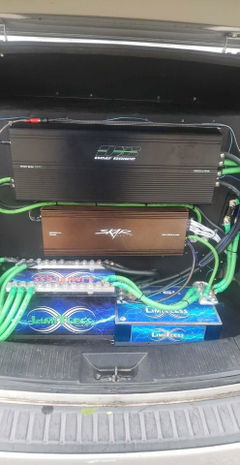
Fuse Blocks for Amp Racks
Custom amplifier racks benefit from clean power distribution just as much as they benefit from clean amplifier mounting.
A centralized fuse block can make it easier to:
- Identify each protected circuit
- Inspect fuse condition
- Service individual amplifiers
- Keep wiring organized
- Reduce loose connection points
- Create a more finished installation
Plan the fuse block location so it remains accessible for inspection and service.
Fuse Blocks for High-Output Alternators
A high-output alternator increases the charging capability available to the vehicle electrical system.
The charging wiring, grounds, batteries and fuse protection need to be planned around the upgraded system rather than leaving restrictive or poorly protected wiring in place.
Charging-cable fuse placement can vary by vehicle and electrical layout, so follow the alternator manufacturer's requirements and the design of the completed charging system.
Fuse Protection for Big 3 Upgrades
The Big 3 upgrade strengthens major charging and ground connections in the vehicle.
The typical Big 3 addresses:
- Alternator positive to battery positive
- Battery negative to chassis
- Engine block to chassis
Whether a specific upgraded positive charging run needs a fuse and where it should be installed depends on the vehicle, wire route, alternator system and installation design.
Do not copy another vehicle's fuse arrangement without verifying that it applies to your build.
Fuse Blocks for Additional Batteries
Multi-battery systems can create more than one electrical power source, which makes fuse placement especially important.
Depending on the battery locations and wiring design, power cables between batteries may require protection at more than one end.
Battery chemistry and charging voltage also matter.
Shop Lithium & LTO Batteries | Shop Sodium Batteries | Shop Car Audio Electrical
Fuse Holder for 1/0 Gauge Wire
Large 1/0 gauge power cable is commonly paired with ANL-style fuse protection in higher-current car audio systems.
Audio Sellerz carries a Sky High Car Audio 1/0 Gauge ANL Fuse Holder designed for 1/0 car audio power wire.
Always confirm that the holder accepts the cable, fuse style and electrical requirements of the completed installation.
Fuse Protection for 4 Gauge & 8 Gauge Wiring
Smaller amplifier power wiring still needs protection when connected to a battery or other high-current power source.
Browse the gauge-specific wiring collections when planning the system:
4 Gauge Car Audio Wire | 8 Gauge Car Audio Wire | 0 Gauge & 1/0 Wire
How to Choose a Car Audio Fuse Block
Start with the electrical layout rather than choosing a fuse block by appearance alone.
Before ordering, determine:
- Number of protected circuits
- Main input wire size
- Output wire sizes
- Fuse type required
- Required fuse ratings
- Number of amplifiers
- Battery locations
- Alternator and charging setup
- Available mounting space
- Whether you need distribution as well as fuse protection
How to Choose the Correct Fuse Size
The primary job of fuse protection on a power cable is to protect the wire.
The correct fuse rating depends on:
- Wire gauge
- OFC or CCA conductor material
- Actual conductor construction
- Current demand
- Electrical layout
- Equipment requirements
Do not choose a fuse only from the amplifier's advertised wattage.
For detailed wire and fuse sizing information, read our Car Audio Wire Gauge & Fuse Size Guide.
Where Should the Amplifier Fuse Be Installed?
The main positive power-wire fuse is normally installed close to the battery or other primary power source so as much of the cable run as practical is protected.
More complex electrical systems can have multiple power sources, batteries and distribution points, so the correct fuse layout may require additional protection.
Follow the requirements for the vehicle, battery system, amplifier equipment and wiring being installed.
Bad Fuse Holders Can Cause Voltage Drop
A fuse holder can become a weak point when the connections are poor.
Problems can include:
- Loose set screws
- Poor wire contact
- Loose fuse connections
- Corrosion
- Damaged terminals
- Undersized connections
- Overheated plastic
These problems add resistance, and resistance can create heat and voltage drop.
If a fuse holder becomes unusually hot, discolored or melted, stop using the system until the wiring and protection hardware are inspected.
Fuse Holder Getting Hot
A fuse holder that becomes hot under normal system operation can indicate a wiring or connection problem.
Check:
- Fuse size
- Wire size
- Connection tightness
- Terminal condition
- Fuse contact area
- Corrosion
- System current demand
Do not treat excessive heat as normal just because the amplifier still plays.
Fuse Problems & Amplifier Protect Mode
A poor high-current connection can contribute to voltage problems that cause an amplifier to shut down or enter protect mode.
If the fuse holder and wiring appear questionable, inspect them along with:
- Battery voltage
- Amplifier ground
- Power-wire connections
- Final speaker impedance
- Speaker wiring
- Amplifier temperature
Read our Amp Protect Mode Causes & Fixes for more troubleshooting help.
Current Audio Sellerz Fuse Block Options
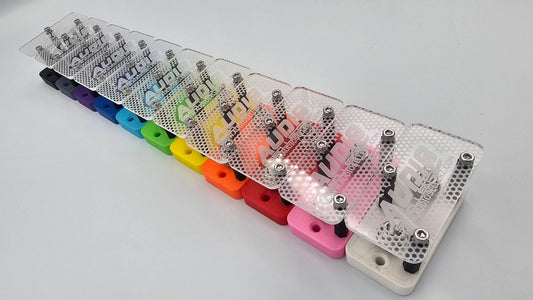
The current Audio Sellerz Fuse Blocks collection includes single and multi-spot fuse-block designs for different car audio electrical layouts.
Current product families include:
- Audio Sellerz Economy Single Fuse Block
- Audio Sellerz Economy Mini ANL Single-Spot Fuse Block
- Audio Sellerz Economy 2-Spot Fuse Block
- Audio Sellerz Economy 3-Spot Fuse Block
Availability and color options can change, so use the product grid above for current purchasing information.
Where to Buy Car Audio Fuse Blocks
If you already have your amplifiers, battery, alternator or wiring and need fuse protection to finish the electrical system, AudioSellerz.com carries car audio fuse blocks, fuse holders, wire, amp kits and supporting electrical-installation parts.
If you are unsure what fuse block you need, use our live chat and send us:
- Amplifier brand and model
- Number of amplifiers
- Power-wire gauge
- OFC or CCA wire
- Battery setup
- Alternator setup
- Number of protected power circuits
- Current distribution layout
We can help narrow down whether you need a single holder, multi-spot fuse block or another power-distribution layout.
Why Buy Fuse Blocks From Audio Sellerz?
Audio Sellerz is a real car audio shop operated by people who build and install the equipment we sell.
Owner Aaron Bryant has been involved in car audio since 2008 and has experience with amplifier wiring, battery upgrades, high-output alternators, Big 3 wiring, multi-amp systems and competition-level car audio.
Fuse protection is not just an accessory added at the end of the build. It is part of the electrical system.
We consider:
- Wire gauge
- OFC vs CCA
- Fuse type
- Fuse rating
- Number of amplifiers
- Battery layout
- Charging-system upgrades
- Power distribution
- Installation serviceability
Need help choosing a fuse block or fuse holder? Use the live chat bubble on AudioSellerz.com and tell us what electrical system you are building.
Car Audio Fuse Block FAQ
What is a car audio fuse block?
A car audio fuse block provides a centralized location for one or more fuses protecting aftermarket power wiring.
Do I need a fuse for my car audio amplifier?
Positive power wiring connected to a high-current electrical source needs appropriate fuse protection. Follow the amplifier, wire and vehicle installation requirements.
What is an ANL fuse holder?
An ANL fuse holder secures an ANL-style fuse and is commonly used in higher-current car audio power wiring.
What is a Mini ANL fuse holder?
A Mini ANL holder uses the smaller Mini ANL or AFS-style fuse format and is useful in compatible lower-current or compact installations.
What is the difference between a fuse block and a distribution block?
A fuse block provides fuse protection. A distribution block splits one electrical connection into multiple outputs. A fused distribution block performs both functions.
What size fuse do I need for my amplifier?
The correct fuse depends on the wire, conductor material, current demand and electrical layout. The fuse should protect the connected wiring rather than being selected from amplifier wattage alone.
Where should the amplifier fuse go?
The main power-wire fuse is generally installed close to the battery or primary power source so the downstream cable is protected.
Can a bad fuse holder cause voltage drop?
Yes. Loose, corroded or undersized connections can add electrical resistance and create heat and voltage drop.
Do I need a fuse between two batteries?
Multi-battery systems can require fuse protection based on the battery locations, cable routing and electrical design. Both ends of a cable may be exposed to power depending on the layout.
Does every amplifier need its own fuse?
Each amplifier power branch should be protected appropriately. This can be done with individual fuse holders, a fused distribution block or another correctly designed layout.
Can Audio Sellerz help me choose a fuse block?
Yes. Use our live chat and provide your amplifier models, wire sizes, battery setup and number of protected circuits.
Helpful Fuse, Wire & Electrical Guides
- Car Audio Wire Gauge & Fuse Size Guide
- Car Audio Grounding Guide
- Car Audio Wiring Diagram Guide
- Amp Protect Mode Causes & Fixes
Shop Car Audio Fuse Blocks at AudioSellerz.com
Shop car audio fuse blocks, amp fuse holders, ANL fuse holders, Mini ANL fuse blocks and fused power-distribution parts at AudioSellerz.com.
Shop Car Audio Wire | Shop Power & Ground Wire | Shop Amp Kits | Shop Big 3 Kits
Shop 0 Gauge Wire | Shop 4 Gauge Wire | Shop 8 Gauge Wire | Shop Car Audio Electrical
Have a question before ordering? Use the live chat bubble on AudioSellerz.com and tell us what amplifiers, wire, batteries and charging system you are using.
Follow Audio Sellerz
Follow Audio Sellerz for amplifier wiring, fuse protection, electrical upgrades, battery systems, alternator installs and high-power car audio builds: