16 Gauge Wire
-
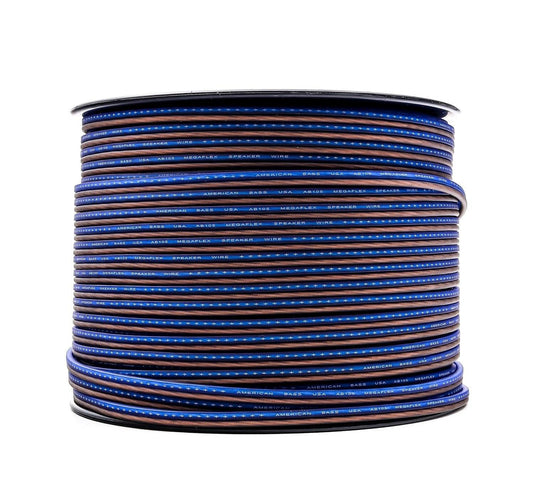
American Bass 16 Gauge Mega Flex Speaker Wire 500/75ft
Vendor:American BassRegular price From $16.13 USDRegular price -
Sky High Car Audio 16 Gauge Speaker Wire 100ft
Vendor:Sky High Car AudioRegular price $13.95 USDRegular price -
Sky High Car Audio CCA 16 Gauge Speaker Wire 600ft
Vendor:Sky High Car AudioRegular price $59.95 USDRegular price



-
 American Bass 16 Gauge Mega Flex Speaker Wire 500/75ftAmerican Bass 16 Gauge Mega Flex Speaker Wire 500/75ft Sold by AudioSellerz.com Shop the American Bass 16 Gauge Mega ...$16.13
 -
 Sky High Car Audio 16 Gauge Speaker Wire 100ftSky High Car Audio CCA 16 Gauge Speaker Wire 100ft Sold by AudioSellerz.com Sky High Car Audio CCA 16 Gauge Speaker...$13.95
 -
 Sky High Car Audio CCA 16 Gauge Speaker Wire 600ftSky High Car Audio 16-Gauge Speaker WireSold by AudioSellerz.com Key Features: Color Options: Available in Blue/Bla...$59.95


16 Gauge Wire
Sold by AudioSellerz.com
Shop 16 gauge speaker wire for car audio, door speakers, tweeters, full-range speakers, component systems, midrange drivers, rear speakers, dashboards and custom speaker pods. Sixteen-gauge wire is a practical choice for many everyday speaker installations because it provides useful conductor size while remaining flexible enough to route through doors, trim panels, dashboards and factory wire boots.
Audio Sellerz carries 16 AWG speaker wire for factory-speaker replacement, aftermarket amplified speakers, mids and highs, motorcycles, powersports systems and custom car audio installations. Compare CCA and OFC options according to speaker power, impedance, total wire distance and the environment where the cable will be installed.
Shop Power & Speaker Wire | Shop 14 Gauge Wire | Shop 12 Gauge Wire | Shop All Car Audio Wire
16 Gauge Speaker Wire for Car Audio
16 gauge speaker wire is one of the most useful sizes for normal car audio speaker installations.
Common applications include:
- Front door speakers
- Rear door speakers
- Factory speaker replacements
- Coaxial speakers
- Full-range speakers
- Component speaker systems
- Tweeters
- Smaller midrange speakers
- Rear-deck speakers
- Dashboard speakers
- Custom speaker pods
- Motorcycles and powersports systems
- Amplifier-to-speaker connections
The correct speaker-wire size depends on amplifier output, speaker impedance, cable length, conductor material and the number of speakers connected to the circuit.
Do not choose speaker wire using peak or maximum wattage alone.
16 AWG Speaker Wire
16 AWG speaker wire and 16 gauge speaker wire refer to the same nominal American Wire Gauge size.
You may see the size written as:
- 16 gauge speaker wire
- 16 AWG speaker wire
- 16ga speaker wire
- 16G speaker wire
- 16 gauge speaker cable
- 16 gauge audio wire
The printed gauge does not tell you whether the wire uses oxygen-free copper or copper-clad aluminum, so conductor material should always be checked when comparing products.
16 Gauge Wire for Door Speakers
16 gauge wire for speakers is especially useful for factory and aftermarket door-speaker installations.
Its relatively compact size makes it easier to route through:
- Factory rubber door boots
- Tight door cavities
- Interior trim panels
- Kick panels
- Dash locations
- Factory speaker openings
Before running new speaker wire into a door, check:
- Speaker RMS power
- Speaker impedance
- Amplifier RMS output
- Number of speakers per channel
- Final amplifier-channel impedance
- Total wire distance
- Window-regulator clearance
- Door-handle and lock mechanisms
- Available space in the factory wire boot
Protect the cable from sharp metal and make sure normal door movement cannot pinch or stretch it.
Browse full range car audio speakers when planning a daily-driver door-speaker upgrade.
16 Gauge Wire for Factory Speaker Replacement
Sixteen gauge is a popular choice when replacing old or undersized factory speaker wiring.
Factory wiring may be completely adequate for the original radio and speakers, but an aftermarket amplifier and upgraded speakers can change the requirements.
Running new 16-gauge speaker wire can make sense when:
- An aftermarket amplifier has been added
- The factory wire is damaged
- New doors or speaker pods are being built
- The factory wiring path has been modified
- The speaker system needs a new dedicated connection
Do not automatically replace factory wiring simply because larger cable exists. Match the wiring to the actual system.
16 Gauge Wire for Tweeters
Sixteen-gauge cable works well for many car audio tweeter installations.
Tweeters normally require much less speaker-wire capacity than high-power subwoofers or midbass speakers, so flexibility and ease of routing can be more important than using an oversized conductor.
Sixteen gauge can be useful for:
- Dash tweeters
- A-pillar tweeters
- Sail-panel tweeters
- Door-mounted tweeters
- Bullet tweeters
- Super tweeters
- Custom tweeter pods
Correct crossover protection is critical. A larger speaker wire does not protect a tweeter from frequencies below its intended operating range.
16 Gauge Wire for Midrange Speakers
Moderate-power midrange speakers can also use 16-gauge speaker wire when amplifier power, impedance and run length are appropriate.
Sixteen gauge is particularly practical for:
- Smaller midrange drivers
- Moderate-power daily-driver systems
- Shorter amplifier-to-door runs
- Multi-speaker systems where routing space is limited
High-output custom doors using substantial amplifier power may benefit from heavier 14- or 12-gauge wire.
16 Gauge Wire for Full Range Speakers
Full range car speakers are another strong application for 16-gauge cable.
It can be used with:
- Coaxial door speakers
- Rear-deck speakers
- Dash speakers
- Component-system woofers
- Compact custom pods
- Motorcycle speakers
For a normal daily-driver speaker upgrade, 16 gauge can offer a good balance between conductor size and installation flexibility.
16 Gauge Wire for Component Speakers
A component-speaker system may include separate woofers, tweeters and passive crossovers.
Sixteen-gauge speaker wire can be used between:
- Amplifier and passive crossover
- Crossover and woofer
- Crossover and tweeter
- Amplifier and actively crossed speaker channels
Follow the speaker-system wiring diagram and keep polarity consistent throughout the installation.
16 Gauge CCA Speaker Wire
16 gauge CCA speaker wire uses copper-clad aluminum conductors.
CCA provides a budget-friendly option when the cable is appropriately sized for the power, impedance and distance of the speaker circuit.
CCA 16-gauge wire can make sense when:
- Speaker power is moderate
- The wire runs are relatively short
- Several speaker locations need to be wired
- A large bulk spool is useful
- The installation budget matters
The live 16G collection currently includes Sky High Car Audio CCA 16-gauge speaker-wire options, including a 600-foot spool that is showing available on the live collection. :contentReference[oaicite:2]{index=2}
16 Gauge OFC Speaker Wire
16 gauge OFC speaker wire uses oxygen-free copper conductors.
Customers may also search for:
- 16 AWG OFC speaker wire
- 16 gauge OFC wire
- OFC 16 gauge speaker wire
- 16 gauge copper speaker wire
- 16ga OFC speaker wire
OFC generally provides greater conductivity than comparable CCA cable at the same nominal gauge.
OFC can be especially useful when:
- The speaker receives more amplifier power
- The wire run is longer
- Reducing avoidable resistance is important
- The wiring will be difficult to replace later
- The system may receive more power in the future
Audio Sellerz has live 16-gauge OFC product pages in the broader catalog, including DS18 16-gauge OFC speaker wire, with availability changing by product. :contentReference[oaicite:3]{index=3}
OFC vs CCA 16 Gauge Speaker Wire
OFC and CCA can both work when the wire is selected correctly, but equal printed gauge does not mean equal electrical performance.
Choose 16 Gauge OFC When:
- The speaker runs are longer
- The speakers receive more amplifier power
- You want greater conductivity
- The installation will be difficult to rewire later
- You want additional electrical headroom
Consider 16 Gauge CCA When:
- The system has moderate demand
- The wire runs are reasonable
- Budget is an important consideration
- A large quantity of cable is required
Read our car audio wire-size and OFC vs CCA guide for detailed wire-sizing information.
Marine-Grade 16 Gauge Speaker Wire
Marine-grade tinned OFC speaker wire can be useful when an installation may experience moisture, humidity or outdoor exposure.
Applications can include:
- Boats
- Motorcycles
- Side-by-sides
- UTVs
- Jeep and open-air audio systems
- Outdoor speaker installations
Tinned copper adds corrosion resistance, but the connections still need proper weather protection.
Audio Sellerz has a live DS18 16-gauge marine-grade tinned OFC speaker-wire product in the broader catalog. :contentReference[oaicite:4]{index=4}
16 Gauge Speaker Wire With RGB Wiring
Some marine and powersports speaker systems use RGB lighting in addition to the audio connection.
A combined cable can place the speaker conductors and RGB control wires inside a shared outer jacket, helping simplify installation and cable management.
Before using combined speaker and RGB wire, confirm:
- Speaker-wire gauge
- RGB-wire gauge
- Speaker polarity
- RGB controller requirements
- Total wire distance
- Environmental exposure
Audio Sellerz also carries a live DS18 marine cable that combines 16-gauge speaker conductors with RGB wiring. :contentReference[oaicite:5]{index=5}
16 Gauge vs 14 Gauge Speaker Wire
14 gauge speaker wire provides more conductor area than 16 gauge.
Choose 16 gauge when:
- The speakers receive moderate power
- The cable runs are relatively short
- Routing space is limited
- The wire needs to pass through restrictive factory door boots
- You are wiring tweeters or smaller full-range speakers
Consider 14 gauge when:
- The speakers receive greater amplifier power
- The wire runs are longer
- You are wiring stronger midrange or full-range speakers
- The system may receive additional amplifier power later
When to Use 12 Gauge Speaker Wire
12 gauge speaker wire provides considerably more conductor area and is more appropriate for many high-power midbass and subwoofer applications.
Move toward 12 gauge when:
- Speaker power is substantially higher
- The wire run is unusually long
- You are wiring strong midbass drivers
- You are connecting a monoblock amplifier to a subwoofer enclosure
- You need more capacity than 14- or 16-gauge wire provides
Can 16 Gauge Wire Be Used for Subwoofers?
It can be appropriate for some smaller or moderate-power subwoofer systems with short cable runs.
However, higher-power subwoofers, longer runs and low-impedance systems can justify heavier speaker cable.
Before using 16 gauge for a subwoofer, check:
- Amplifier RMS output
- Final subwoofer impedance
- Speaker-wire length
- OFC vs CCA
- Enclosure terminal size
For stronger bass systems, compare 12 gauge and 10 gauge speaker wire.
16 Gauge Speaker Wire Is Not Main Amplifier Power Wire
Speaker wire and amplifier power wire perform different jobs.
Speaker wire carries the amplifier's output to the speakers.
Amplifier power wire carries electrical current from the battery or electrical system into the amplifier.
Sixteen-gauge speaker wire should not be used as the primary battery-to-amplifier power cable for a normal aftermarket car audio amplifier.
Depending on amplifier demand, appropriate main power cable may include:
Follow the amplifier manufacturer's power-wire and fuse recommendations.
How Many Amps Can 16 Gauge Wire Handle?
There is no single current rating that accurately describes every piece of 16-gauge car audio cable.
Current capability changes according to:
- OFC vs CCA
- Actual conductor construction
- Wire length
- Temperature
- Installation conditions
- Connection quality
This collection is designed primarily for customers shopping for 16-gauge speaker wire.
For detailed ampacity and wire-sizing information, use our Car Audio Wire Gauge & Amp Wire Size Guide.
How Many Watts Can 16 Gauge Speaker Wire Handle?
There is no universal wattage limit for 16-gauge speaker wire.
The current flowing through the speaker circuit depends on amplifier output, speaker impedance, conductor material and cable length.
Choose wire around the complete electrical circuit rather than relying on a simple “16 gauge equals X watts” rule.
16 Gauge Speaker Wire for 4 Channel Amplifiers
A 4 channel amplifier powering normal aftermarket door speakers is one of the most common systems where 16-gauge speaker wire may be appropriate.
Before wiring the speakers, determine:
- RMS output per channel
- Speaker impedance
- Number of speakers on each channel
- Final channel impedance
- Total wire distance
Higher-output custom doors may need heavier cable even if the system still uses a four-channel amplifier.
Speaker Polarity Matters
Keep positive and negative polarity consistent throughout the system.
A speaker wired out of polarity can work against another speaker and reduce output in part of the frequency range.
Before reinstalling door panels:
- Identify positive and negative conductors
- Label long cable runs
- Verify amplifier-channel connections
- Confirm crossover connections
- Check speaker polarity
Common 16 Gauge Speaker-Wire Mistakes
- Choosing wire from peak wattage alone
- Assuming OFC and CCA perform identically
- Using 16 gauge as main amplifier power cable
- Using 16 gauge for a high-current speaker circuit that needs heavier cable
- Forcing oversized terminals onto small speaker connections
- Ignoring final speaker impedance
- Leaving loose strands at terminals
- Running wire where windows can damage it
- Failing to protect wire through metal openings
- Ignoring total cable distance
How to Choose the Right 16 Gauge Speaker Wire
For factory speaker replacement: 16 gauge is often a practical starting point.
For normal amplified door speakers: compare amplifier RMS power, impedance and cable distance.
For tweeters: prioritize correct crossover protection and terminal compatibility.
For moderate midrange speakers: check whether the system's amplifier power still fits the wire size.
For OFC vs CCA: account for conductor material instead of comparing gauge alone.
For stronger custom doors, midbass or subwoofers: consider stepping up to 14, 12 or 10 gauge.
Where to Buy 16 Gauge Speaker Wire
If you already have your speakers and amplifier and need wire to finish the installation, AudioSellerz.com carries 16-gauge speaker wire along with heavier speaker-wire gauges and complete car audio wiring products.
If you need help choosing a gauge, send us:
- Amplifier brand and model
- Speaker brand and model
- Number of speakers
- Speaker impedance
- Approximate wire distance
- Vehicle or application
- Whether you prefer OFC or CCA
Use the live chat bubble on AudioSellerz.com and we can help determine whether 16, 14, 12 or another wire size fits the build.
Why Buy 16 Gauge Speaker Wire From Audio Sellerz?
Audio Sellerz is a real car audio shop operated by people who build, install, tune and use the equipment we sell.
Owner Aaron Bryant has been involved in car audio since 2008 and has experience with daily-driver speaker upgrades, custom doors, amplifier systems, wiring and competition-level car audio.
Speaker wire should be selected around the actual system rather than simply choosing the largest cable available.
We consider:
- Amplifier RMS output
- Speaker impedance
- Total wire distance
- OFC vs CCA
- Speaker quantity
- Terminal capacity
- Installation location
- Future system plans
Need help choosing 16 gauge speaker wire? Use the live chat bubble on AudioSellerz.com and tell us what speakers and amplifier you are using.
16 Gauge Speaker Wire FAQ
Is 16 gauge speaker wire good for car audio?
Yes. Sixteen gauge is commonly used for factory-speaker upgrades, coaxial speakers, component systems, tweeters and moderate-power mids-and-highs installations.
Is 16 AWG the same as 16 gauge?
Yes. 16 AWG, 16 gauge, 16ga and 16G refer to the same nominal American Wire Gauge size.
Is 16 gauge wire good for door speakers?
Yes. Sixteen gauge can work very well for many factory-style and amplified door-speaker systems when amplifier power and wire distance are appropriate.
Can I use 16 gauge speaker wire for tweeters?
Yes. Tweeters normally have relatively low current requirements. Correct crossover protection is more important than using unusually large speaker wire.
What is 16 gauge OFC speaker wire?
It is 16-gauge cable made with oxygen-free copper conductors.
What is 16 gauge CCA speaker wire?
CCA is copper-clad aluminum speaker cable. It provides a lower-cost option when correctly sized for the speaker circuit.
Is OFC better than CCA?
OFC generally offers greater conductivity than comparable CCA cable and can be preferable for higher-power or longer speaker-wire runs.
Should I use 14 or 16 gauge speaker wire?
Sixteen gauge is practical for many normal speaker installations. Fourteen gauge provides more conductor area and may be better for higher-power speakers or longer cable runs.
Can I use 16 gauge wire for a subwoofer?
It may work for moderate-power subwoofers with short runs. Higher-power or lower-impedance bass systems commonly benefit from heavier speaker wire.
Can 16 gauge wire power an amplifier?
Sixteen-gauge speaker cable should not be used as the main battery-to-amplifier power wire for a normal aftermarket car audio amplifier.
How many amps can 16 gauge wire handle?
There is no single universal rating for every cable. Current capacity changes with conductor material, actual construction, wire length, temperature and installation conditions.
Can Audio Sellerz help me choose speaker wire?
Yes. Use our live chat and provide your amplifier, speakers, impedance and approximate wire distance.
Helpful Car Audio Wiring Guides
- Car Audio Wire Gauge & Amp Wire Size Guide
- Complete Car Audio Wiring Diagram Guide
- How to Set Amp Gain for Subs, Mids & Highs
Shop 16 Gauge Speaker Wire at AudioSellerz.com
Shop 16 gauge speaker wire, 16 AWG speaker cable, OFC and CCA wire for door speakers, tweeters, full-range speakers, midrange speakers and daily-driver car audio systems at AudioSellerz.com.
Shop 14 Gauge Wire | Shop 12 Gauge Wire | Shop Power & Speaker Wire | Shop All Car Audio Wire
Shop Full Range Speakers | Shop Midrange Speakers | Shop Tweeters | Shop 4 Channel Amplifiers
Have a question before ordering? Use the live chat bubble on AudioSellerz.com and tell us what speakers and amplifier you are wiring.
Follow Audio Sellerz
Follow Audio Sellerz for speaker wiring, door-speaker installs, custom builds, amplifier setups, tuning tips and new car audio products: