14 Gauge Wire
-
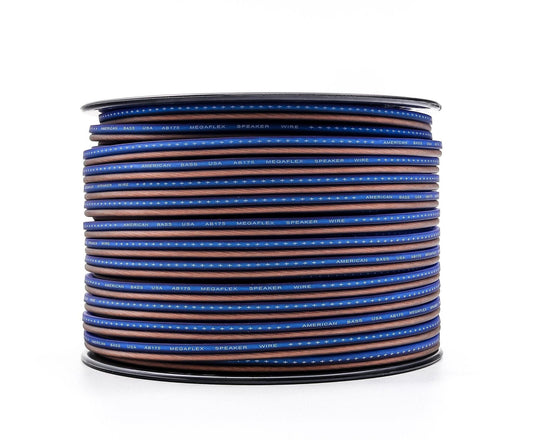
American Bass 14 Gauge Mega Flex Speaker Wire 200ft Roll
Vendor:American BassRegular price $48.65 USDRegular price -
Sky High Car Audio CCA 14 Gauge Speaker Wire 400ft
Vendor:Sky High Car AudioRegular price $59.95 USDRegular price -
Sky High Car Audio CCA 14 Gauge Speaker Wire – 100ft Spool
Vendor:Sky High Car AudioRegular price $21.95 USDRegular price -
Sky High Car Audio OFC 14 Gauge Speaker Wire – 100ft Spool
Vendor:Sky High Car AudioRegular price $38.18 USDRegular price



-
 American Bass 14 Gauge Mega Flex Speaker Wire 200ft RollAmerican Bass 14 Gauge Mega Flex Speaker Wire 200ft Roll Sold by AudioSellerz.com Build around accurate product infor...$48.65
 -
 Sky High Car Audio CCA 14 Gauge Speaker Wire 400ftSky High Car Audio E-Series 14 Gauge Speaker WireSold by AudioSellerz.com Upgrade your car audio system with the Sky ...$59.95
 -
 Sky High Car Audio CCA 14 Gauge Speaker Wire – 100ft SpoolSky High Car Audio CCA 14 Gauge Speaker Wire – 100ft Spool is built for clean, reliable speaker wiring in everyday ca...$21.95
 -
 Sky High Car Audio OFC 14 Gauge Speaker Wire – 100ft SpoolSky High Car Audio OFC 14 Gauge Speaker Wire 100ft SpoolSold by AudioSellerz.com. The Sky High Car Audio OFC 14 Gauge...$38.18


14 Gauge Wire
Sold by AudioSellerz.com
Shop 14 gauge speaker wire for car audio, amplified door speakers, midrange drivers, full-range speakers, component systems, rear decks, custom doors, speaker pods, motorcycles and daily-driver audio builds. Fourteen-gauge wire provides a useful balance between conductor size, current capability and flexibility, making it one of the most practical speaker-wire sizes for aftermarket car audio.
Audio Sellerz carries 14 AWG speaker wire in OFC and CCA options from car audio brands including Sky High Car Audio and American Bass. Choose the conductor material, spool length and cable design that match the amplifier power, speaker impedance, wire distance and installation.
Shop Power & Speaker Wire | Shop 12 Gauge Wire | Shop 16 Gauge Wire | Shop All Car Audio Wire
14 Gauge Speaker Wire for Car Audio
14 gauge speaker wire is commonly used when upgrading factory speakers or wiring aftermarket speakers to an external amplifier.
Common uses include:
- Front door speakers
- Rear door speakers
- Full-range speakers
- Component speaker systems
- Midrange speakers
- Moderate-power midbass speakers
- Rear-deck speakers
- Custom speaker pods
- Custom door panels
- Motorcycle speakers
- Powersports systems
- Amplifier-to-speaker wiring
Fourteen gauge provides more conductor area than 16 gauge while remaining easier to route through many factory door boots and interior panels than heavier 12-gauge or 10-gauge cable.
14 AWG Speaker Wire
14 AWG speaker wire and 14 gauge speaker wire refer to the same nominal American Wire Gauge size.
You may see it written as:
- 14 gauge speaker wire
- 14 AWG speaker wire
- 14ga speaker wire
- 14 gage speaker wire
- 14G speaker wire
- Speaker wire gauge 14
The gauge alone does not tell you whether the conductor is OFC or CCA, so always check the cable material when comparing products.
14 Gauge Wire for Door Speakers
Speaker wire for door speakers is one of the strongest applications for 14 gauge cable.
Fourteen-gauge wire is large enough for many amplified aftermarket speakers while still being practical to route through factory doors.
Before installing new wire through a door, check:
- Speaker RMS power
- Speaker impedance
- Number of speakers per amplifier channel
- Final impedance on each channel
- Amplifier RMS output
- Factory door-boot space
- Window-regulator clearance
- Door-handle and lock mechanisms
- Speaker terminal size
Make sure the wire can move normally as the door opens and closes without being pinched or rubbing against sharp metal.
Shop Full Range Speakers | Shop Midrange Speakers | Shop 4 Channel Amplifiers
14 Gauge Wire for Amplified Speakers
When aftermarket speakers are powered from an external amplifier, the speaker wiring may carry significantly more output than the original factory wiring was designed around.
Fourteen gauge can work well for many:
- Four-channel amplifier systems
- Amplified coaxial speakers
- Component speaker systems
- Midrange speakers
- Full-range speakers
- Custom-door systems
The correct wire size depends on actual RMS power, impedance and total cable length rather than a universal speaker-wattage rule.
14 Gauge Wire for Custom Doors
Custom car audio doors can use several midrange, midbass or full-range speakers on each side of the vehicle.
For a multi-speaker door, plan the complete circuit before running wire.
Determine:
- Number of speakers
- Impedance of each speaker
- Number of speakers connected to each amplifier channel
- Series or parallel wiring
- Final impedance per channel
- Amplifier RMS output at that impedance
- Total wire distance
Two or more speakers wired together can change the load the amplifier sees, so wire size and amplifier stability should be planned together.
For more help with complete system wiring, read our car audio wiring diagram guide.
14 Gauge Wire for Midrange Speakers
Midrange speakers are a common use for 14-gauge speaker cable because many amplified mids receive considerably more power than a basic factory speaker.
Fourteen gauge can be a good fit when:
- The mids are amplifier powered
- The wire runs are moderate in length
- The speaker terminals accept the cable
- The system does not require heavier 12-gauge wiring
For very high-output multi-speaker doors, 12 gauge or heavier cable may make more sense depending on current and run length.
14 Gauge Wire for Full Range Speakers
Full range speakers can also work well with 14 gauge wire when powered from an aftermarket amplifier.
This includes systems using full-range drivers in:
- Doors
- Rear decks
- Custom pods
- Motorcycles
- Side-by-sides
- Daily-driver speaker upgrades
The cable should still be matched to the amplifier power, speaker impedance and total length of the run.
14 Gauge Wire for Tweeters
Most car audio tweeters do not require especially heavy speaker wire because their power and current demands are relatively low.
However, 14 gauge can still be used when:
- The tweeter terminals accept it
- The wiring is shared with a component system
- A custom door uses one consistent speaker-wire size
- The installation already uses 14 gauge throughout the mids-and-highs section
Correct crossover protection is much more important to tweeter reliability than simply installing oversized wire.
14 Gauge OFC Speaker Wire
14 gauge OFC speaker wire uses oxygen-free copper conductors.
Customers may also search for:
- 14 AWG OFC speaker wire
- 14 gauge OFC wire
- OFC 14 gauge speaker wire
- 14 gauge copper speaker wire
- 14ga OFC speaker wire
OFC generally provides greater conductivity than comparable CCA cable of the same nominal gauge.
Fourteen-gauge OFC can make sense when:
- The speakers receive more amplifier power
- The speaker-wire runs are longer
- The system uses high-output midrange or full-range speakers
- You want additional electrical headroom
- You prefer copper wiring throughout the audio system
Audio Sellerz carries Sky High Car Audio 14-gauge OFC speaker-wire options along with CCA alternatives.
14 Gauge CCA Speaker Wire
14 gauge CCA speaker wire uses copper-clad aluminum conductors.
CCA can provide a lower-cost option for properly sized speaker installations.
It can work well when:
- The speaker runs are moderate
- The amplifier power is appropriate
- A large amount of wire is needed
- The installation budget matters
- The system is intentionally sized around CCA
Do not assume 14-gauge CCA and 14-gauge OFC provide identical electrical performance simply because the gauge number is the same.
OFC vs CCA 14 Gauge Speaker Wire
Choose 14 Gauge OFC When:
- You want greater conductivity
- Speaker power is higher
- The cable run is longer
- You want additional headroom
- The system may receive more amplifier power later
Consider 14 Gauge CCA When:
- The system has moderate demand
- The wire run is appropriate for the conductor
- Budget is an important consideration
- You need a large quantity of speaker wire
For a deeper comparison, read our car audio wire-size and OFC vs CCA guide.
14 Gauge Speaker Wire for Subwoofers
Fourteen-gauge wire can work for some moderate-power subwoofer systems, particularly when the amplifier-to-enclosure run is short.
Before using 14 gauge for a subwoofer, check:
- Amplifier RMS output
- Final subwoofer impedance
- Total wire distance
- OFC or CCA construction
- Subwoofer terminal size
Higher-power bass systems and longer runs may be better served by 12 gauge speaker wire or 10 gauge speaker wire.
14 Gauge vs 12 Gauge Speaker Wire
12 gauge has more conductor area than 14 gauge.
14 Gauge Makes Sense When:
- You are wiring normal amplified door speakers
- The runs are moderate in length
- You need easier routing through factory doors
- The speaker terminals may not accept 12 gauge
- The connected power does not require the larger conductor
Consider 12 Gauge When:
- The speakers receive more amplifier power
- The wire runs are longer
- You are wiring higher-power midbass speakers
- You are connecting to a subwoofer enclosure
- The system may receive more power later
Browse 12 Gauge Wire when the installation calls for a heavier speaker cable.
14 Gauge vs 16 Gauge Speaker Wire
16 gauge speaker wire is smaller and easier to route than 14 gauge.
Sixteen gauge can work well for:
- Factory-style replacement speakers
- Moderate coaxial speakers
- Tweeters
- Rear fill
- Short speaker-wire runs
Move toward 14 gauge when amplifier power, run length or speaker demand increases.
14 Gauge Wire Is Speaker Wire, Not Main Amplifier Power Wire
Speaker wire and amplifier power wire perform different jobs.
Speaker wire carries the amplifier's output to the speakers.
Amplifier power wire carries current from the vehicle's electrical system into the amplifier.
Fourteen gauge is too small for the main power and ground connection on most aftermarket car audio amplifiers.
Depending on the amplifier, the correct main power cable may be:
Always use the amplifier manufacturer's recommended power-wire and fuse requirements.
How Many Amps Can 14 Gauge Wire Handle?
There is no single current number that accurately describes every piece of 14-gauge car audio wire.
Current capability changes with:
- OFC vs CCA
- Actual conductor size
- Wire length
- Temperature
- Installation conditions
- Connection quality
This collection is intended primarily for customers shopping for 14-gauge speaker wire.
For detailed ampacity and wire-sizing information, use our Car Audio Wire Size Guide.
How Many Watts Can 14 Gauge Speaker Wire Handle?
There is no universal wattage limit for 14-gauge speaker wire.
The current in a speaker circuit depends on amplifier output, speaker impedance, conductor material and wire length.
Two systems producing similar wattage at different impedances can place different current demands on their speaker wiring.
Choose wire using the complete circuit rather than a simple wattage chart.
Measure the Complete Speaker-Wire Run
Measure the route the cable will actually follow, not just the straight-line distance between the amplifier and speaker.
Include:
- Routing under carpet
- Interior panels
- Door boots
- Amplifier racks
- Passive crossovers
- Speaker pods
- Service loops
- Extra cable needed to remove equipment later
Buying enough cable at the beginning helps avoid unnecessary splices and mismatched sections later.
Speaker Polarity Matters
Keep positive and negative speaker-wire polarity consistent throughout the installation.
Reversing polarity on one speaker can cause it to work against another speaker and reduce output in parts of the frequency range.
Before closing the doors or interior panels:
- Identify the positive conductor
- Identify the negative conductor
- Label long cable runs
- Check amplifier-channel connections
- Verify crossover connections
- Confirm speaker polarity
Secure 14 Gauge Speaker-Wire Connections
Correct wire size does not help if the connections are loose or damaged.
For a reliable installation:
- Strip only the insulation required
- Keep loose copper strands away from nearby terminals
- Use terminals or ferrules sized for the cable when appropriate
- Tighten set-screw terminals securely
- Protect wire where it passes through metal
- Keep cable away from seat tracks and moving windows
- Secure long runs to prevent rubbing
- Protect moisture-exposed connections
Set the Amplifier Correctly After Rewiring
New speaker wire cannot correct an amplifier that is improperly tuned.
After rewiring the speakers:
- Confirm the final impedance
- Set appropriate high-pass filters
- Set low-pass filters when required
- Disable unnecessary bass boost
- Set amplifier gain correctly
- Listen for clipping or speaker stress
Read our guide to setting amplifier gain for subs, mids and highs.
Common 14 Gauge Speaker-Wire Mistakes
- Choosing speaker wire from peak wattage alone
- Assuming OFC and CCA are electrically identical
- Using 14 gauge as main amplifier power cable
- Forcing wire into terminals that are too small
- Ignoring speaker impedance
- Running wire where windows or seat tracks can damage it
- Leaving loose strands at amplifier or speaker terminals
- Failing to secure long wire runs
- Using a larger gauge when the application does not need it
- Using a smaller gauge only because it is easier to install
How to Choose the Right 14 Gauge Speaker Wire
For normal amplified door speakers: 14 gauge is often an excellent place to start.
For higher-power midrange speakers: check amplifier RMS output, impedance and wire distance.
For custom doors: calculate the final load on each amplifier channel before wiring.
For OFC vs CCA: account for conductor material instead of comparing gauge numbers alone.
For moderate subwoofers: check whether 14 gauge provides enough capacity or whether 12 gauge is a better fit.
For factory-style low-power speakers: consider whether 16 gauge is all you actually need.
Where to Buy 14 Gauge Speaker Wire
If you already have your amplifier and speakers and simply need the correct wire to finish the system, AudioSellerz.com carries 14-gauge speaker wire along with additional gauges for complete car audio installations.
If you are unsure which gauge to use, send us:
- Amplifier brand and model
- Speaker brand and model
- Number of speakers
- Speaker impedance
- Approximate wire distance
- Vehicle or application
- Whether you prefer OFC or CCA
Use the live chat bubble on AudioSellerz.com and we can help narrow down whether 12, 14, 16 or another gauge makes sense.
Why Buy 14 Gauge Speaker Wire From Audio Sellerz?
Audio Sellerz is a real car audio shop operated by people who build, install, tune and use the equipment we sell.
Owner Aaron Bryant has been involved in car audio since 2008 and has experience with daily drivers, custom doors, speaker systems, amplifier wiring and competition-level car audio.
Speaker wire should be selected around the system rather than simply choosing the largest cable available.
We consider:
- Amplifier RMS output
- Speaker impedance
- Wire distance
- OFC vs CCA
- Speaker quantity
- Terminal capacity
- Installation location
- Future system plans
Need help choosing 14 gauge speaker wire? Use the live chat bubble on AudioSellerz.com and tell us what speakers and amplifier you are using.
14 Gauge Speaker Wire FAQ
Is 14 gauge speaker wire good for car audio?
Yes. Fourteen gauge is a common choice for amplified door speakers, component systems, midrange speakers, full-range speakers and many daily-driver audio upgrades.
Is 14 AWG the same as 14 gauge?
Yes. 14 AWG, 14 gauge, 14ga and 14G all refer to the same nominal American Wire Gauge size.
Is 14 gauge speaker wire good for door speakers?
Yes. It provides a useful balance between conductor size and flexibility for many amplified door-speaker systems.
What is 14 gauge OFC speaker wire?
It is 14-gauge speaker cable made with oxygen-free copper conductors.
What is 14 gauge CCA speaker wire?
CCA is copper-clad aluminum cable. It can provide a lower-cost solution when properly sized for the speaker circuit.
Is OFC better than CCA?
OFC generally provides greater conductivity than comparable CCA cable and can be preferable for higher-power or longer speaker-wire runs.
Should I use 12 or 14 gauge speaker wire?
Use the gauge appropriate for amplifier power, impedance and wire length. Twelve gauge provides more conductor area, while 14 gauge is easier to route and sufficient for many door-speaker systems.
Should I use 14 or 16 gauge speaker wire?
Sixteen gauge can work well for lower-to-moderate-power speakers and shorter runs. Fourteen gauge provides more conductor area for stronger amplified systems.
Can I use 14 gauge speaker wire for a subwoofer?
It may work for moderate-power subwoofer systems with shorter cable runs. Higher-power or lower-impedance systems may benefit from 12 or 10 gauge wire.
Can I use 14 gauge wire to power an amplifier?
It is too small for the primary power connection on most aftermarket car audio amplifiers. Use the power-wire size recommended by the amplifier manufacturer.
How many amps can 14 gauge wire handle?
There is no single universal current rating for all 14-gauge cable. Capacity changes according to conductor material, wire length, temperature and installation conditions.
Can Audio Sellerz help me choose speaker wire?
Yes. Use our live chat and provide your amplifier, speaker models, impedance and approximate wire distance.
Helpful Car Audio Wiring Guides
- Car Audio Wire Size Guide: OFC vs CCA
- Complete Car Audio Wiring Diagram Guide
- How to Set Amplifier Gain for Subs, Mids & Highs
Shop 14 Gauge Speaker Wire at AudioSellerz.com
Shop 14 gauge speaker wire, 14 AWG speaker cable, OFC and CCA wire for door speakers, midrange speakers, full-range speakers and custom car audio systems at AudioSellerz.com.
Shop 12 Gauge Wire | Shop 16 Gauge Wire | Shop Power & Speaker Wire | Shop All Car Audio Wire
Shop Full Range Speakers | Shop Midrange Speakers | Shop Tweeters | Shop 4 Channel Amplifiers
Have a question before ordering? Use the live chat bubble on AudioSellerz.com and tell us what speakers and amplifier you are wiring.
Follow Audio Sellerz
Follow Audio Sellerz for speaker wiring, custom doors, amplifier installs, tuning tips and new car audio products: