5+ Channel Amplifiers
-
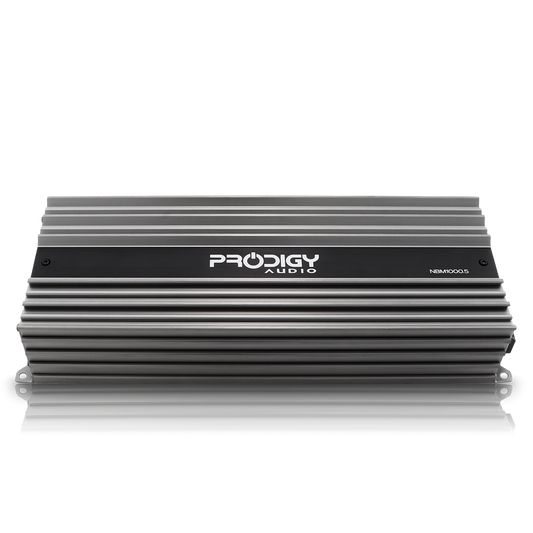
Prodigy Audio NBM1000.5 1000 Watt 5-Channel Amplifier
Vendor:Prodigy AudioRegular price $387.99 USDRegular price$464.99 USDSale price $387.99 USDSale

-
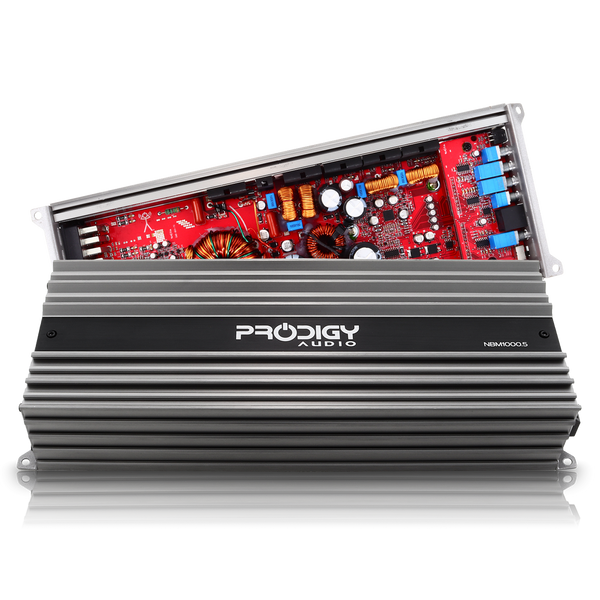 Prodigy Audio NBM1000.5 1000 Watt 5-Channel AmplifierProdigy Audio NBM1000.5 1000 Watt 5-Channel Amplifier Sold by AudioSellerz.com The Prodigy Audio NBM1000.5 1000 Watt ...$387.99
$464.99
5+ Channel Amplifiers for Car Audio
Sold by AudioSellerz.com
Shop 5+ channel amplifiers for car audio designed to power multiple parts of a sound system from one amplifier chassis. Five-channel and higher-channel-count amplifiers can simplify complete car audio builds by combining speaker amplification, subwoofer power and multiple independent channels into one compact installation.
A 5-channel amplifier is the most common option in this category, typically using four channels for speakers and a fifth channel for a subwoofer. Higher-channel-count amplifiers can provide even more flexibility for multi-speaker, active and custom systems.
Shop all car audio amplifiers | Shop 4-channel amplifiers | Shop monoblock amps | Shop RCA cables | Shop amp kits
What Is a 5+ Channel Car Audio Amplifier?
A 5+ channel amplifier has five or more independently amplified output channels in one chassis.
The most common 5-channel car audio layout is:
- Channel 1 — front left speaker
- Channel 2 — front right speaker
- Channel 3 — rear left speaker
- Channel 4 — rear right speaker
- Channel 5 — subwoofer
This allows one amplifier to handle most or all of a complete daily-driver audio system without installing separate speaker and subwoofer amplifiers.
Higher-channel-count amplifiers can be useful when a system needs additional speaker channels, active crossover control or more independent amplification.
Why Choose a 5 Channel Amplifier?
A 5 channel amp is one of the cleanest ways to upgrade an entire car audio system without filling the vehicle with multiple amplifiers.
Benefits can include:
- One amplifier instead of separate speaker and subwoofer amps
- Less mounting space
- Cleaner amplifier racks
- Simpler power distribution
- Less installation clutter
- Dedicated power for front and rear speakers
- Dedicated subwoofer power
- Easy system planning for daily drivers
For customers who want better speakers and stronger bass without building a large multi-amplifier system, a 5-channel amp can be an excellent solution.
5 Channel Amp for 4 Speakers and a Subwoofer
One of the most popular uses for a 5-channel amplifier is powering four speakers and one subwoofer system.
The first four channels handle the speaker system while the fifth channel supplies dedicated bass power.
This setup works well with:
- Four door speakers
- Front components and rear coaxials
- Front and rear full-range speakers
- Daily-driver mids and highs
- One properly matched subwoofer
- Two compatible subwoofers when the fifth channel supports the final load
The speaker channels and subwoofer channel usually produce different amounts of power, so each part of the amplifier needs to be matched separately.
Prodigy Audio NBM1000.5 5-Channel Amplifier
The Prodigy Audio NBM1000.5 1000 Watt 5-Channel Amplifier is a compact full-system amplifier designed to power four speaker channels and a dedicated subwoofer channel from one chassis.
Its rated output includes:
- 100 watts RMS x 4 plus 250 watts RMS x 1 at 4 ohms
- 130 watts RMS x 4 plus 400 watts RMS x 1 at 2 ohms
- Up to 500 watts RMS on channel 5 at 1 ohm
- 260 watts RMS x 2 bridged plus 250 watts RMS x 1 at 4 ohms
Channels 1 through 4 are stable down to 2 ohms stereo, while channel 5 is stable down to 1 ohm. It also includes a remote bass controller with voltage, temperature and clipping display. :contentReference[oaicite:1]{index=1}
This type of amplifier can be a strong fit for:
- Daily-driver systems
- Trucks
- Compact cars
- Clean trunk builds
- Under-seat or space-conscious installations
- Customers who want one amp for speakers and bass
5 Channel Amp vs 4 Channel Amp Plus Monoblock
Both layouts can build an excellent car audio system.
Choose a 5 Channel Amplifier When You Want:
- One amplifier chassis
- A compact installation
- Less wiring complexity
- Speaker and subwoofer power together
- A clean daily-driver system
- Less amplifier-rack space
Choose a 4 Channel Amp Plus Monoblock When You Want:
- Much more subwoofer power
- Multiple large subwoofers
- More upgrade flexibility
- Independent speaker and bass amplifiers
- Large custom doors
- High-output mids and highs
- Demo or competition-level output
For separate amplification, browse our 4-channel amplifiers and monoblock amps for car audio.
5+ Channel Amplifiers for Complete Car Audio Systems
Five-channel and higher-channel-count amplifiers are useful because they allow more of the audio system to be powered from a single chassis.
Depending on the amplifier, additional channels can be used for:
- Front speakers
- Rear speakers
- Midrange speakers
- Midbass speakers
- Tweeters
- Subwoofers
- Active speaker systems
- Custom multi-way systems
The correct channel layout depends on the amplifier's crossover capabilities, RMS output and the speakers being connected.
5+ Channel Amps for Daily Drivers
A multi-channel amplifier can be especially useful in a daily-driven vehicle where sound quality, clean installation and usable cargo space matter.
A simple full-system build may include:
- Four upgraded speakers
- One 5-channel amplifier
- One subwoofer
- A properly matched subwoofer enclosure
- An amplifier wiring kit
- RCA cables
- Speaker wire
This gives the vehicle dedicated speaker power and real subwoofer output while keeping the system relatively simple.
5 Channel Amplifiers for Door Speakers
The first four channels of a typical 5-channel amplifier are commonly used for front and rear speakers.
They can power compatible:
- Coaxial speakers
- Component speakers
- Full-range speakers
- Midrange speakers
- Midbass speakers
Browse our car audio speakers when building the speaker side of the system.
5 Channel Amplifiers for Subwoofers
The fifth channel is commonly designed to provide more power than the individual speaker channels because subwoofers generally require more amplifier power.
This works well for:
- Single-subwoofer systems
- Moderate daily-driver bass
- Truck systems
- Compact sealed enclosures
- Ported daily systems
- Systems where extreme SPL is not the goal
Always compare the fifth channel's RMS output at the final wired impedance to the RMS requirements of the subwoofer system.
Browse our car audio subwoofers and subwoofer boxes.
Can a 5 Channel Amp Power Two Subwoofers?
Yes, if the two subwoofers can be wired to a final impedance that channel 5 safely supports and their combined RMS requirement matches the amplifier's output.
The number of subwoofers does not determine whether the amplifier can power them. The important numbers are:
- Voice-coil configuration
- Final wired impedance
- Combined RMS power
- Channel 5 RMS output at that load
Choosing the Right 5+ Channel Amplifier
Do not choose a multi-channel amplifier only from the total wattage printed in the product name.
Compare:
- RMS output per speaker channel
- RMS output of the subwoofer channel
- Minimum impedance per channel
- Bridged impedance capability
- Crossover controls
- Input options
- Amplifier dimensions
- Power and ground requirements
- Fuse requirements
- Available installation space
The right amp needs to match every speaker section it will power.
RMS Power for Speakers and Subs
A total amplifier wattage number does not explain how power is divided across the channels.
Always look at:
Channels 1–4: RMS output at the impedance of your speakers.
Channel 5: RMS output at the final impedance of your subwoofer system.
This is much more useful than comparing total or peak wattage numbers.
RCA Cables for 5+ Channel Amplifiers
A multi-channel amplifier needs the correct input signal for each channel group.
Depending on the amplifier and source unit, the system may use multiple RCA pairs or multi-channel RCA cables.
Browse our car audio RCA cables and interconnects for 2-channel, 4-channel and multi-channel signal wiring.
Using a 5 Channel Amp With a Factory Radio
You can keep the factory radio and still install a 5-channel amplifier when the factory signal is integrated correctly.
Depending on the vehicle, this may require:
- Speaker-level amplifier inputs
- A line output converter
- A DSP
- A factory-amplifier interface
- A vehicle-specific integration solution
Browse our line output converters and hi-lo converters when adding an amplifier to a factory radio.
Power Wire & Amp Kits
A 5+ channel amplifier still needs proper electrical support.
Use correctly sized power and ground wire, proper fuse protection and a clean solid ground.
Browse our car audio amp kits and power, ground and speaker wire for the installation.
Compact Multi-Channel Amplifiers
One of the biggest advantages of using a 5-channel or higher-channel-count amplifier is saving space.
Compact multi-channel amps can be useful in:
- Trucks
- Compact cars
- Hatchbacks
- Under-seat installations
- Small amplifier racks
- Clean trunk builds
- Vehicles where cargo space matters
Physical size does not determine electrical demand. A compact amplifier still needs wiring and fuse protection sized for its actual current requirements.
When a 5+ Channel Amplifier Is Not the Best Choice
A multi-channel amp is great for many complete daily systems, but separate amplifiers may be better when you need:
- Very high subwoofer power
- Several large subwoofers
- Large custom door builds
- Extreme mids and highs output
- Dedicated amplifiers for separate frequency sections
- More independent tuning control
- A demo or competition-style system
In those cases, separate 2-channel amplifiers, 4-channel amplifiers and monoblock amplifiers may give you more flexibility.
5+ Channel Amplifier FAQs
What is a 5 channel amplifier?
A 5-channel amplifier has five amplified output channels. A common car audio configuration uses four channels for speakers and one channel for a subwoofer.
What does 5+ channel amplifier mean?
It refers to amplifiers with five or more channels. That can include 5-channel, 6-channel, 8-channel and other high-channel-count amplifier configurations.
Is a 5 channel amp good for car audio?
Yes. A properly matched 5-channel amp can power most of a complete daily-driver audio system from one amplifier chassis.
Can a 5 channel amp power four speakers and a subwoofer?
Yes. Four speakers plus a subwoofer is one of the most common uses for a 5-channel car audio amplifier.
Can a 5 channel amp power two subs?
Yes, when the combined RMS requirement and final wired impedance of the subwoofers match the capabilities of channel 5.
Is a 5 channel amp better than separate amplifiers?
It depends on the system. A 5-channel amp is compact and simple, while separate amplifiers can provide more power and flexibility for larger builds.
Do I need RCA cables for a 5 channel amp?
Usually, unless the amplifier accepts speaker-level input directly. The number of RCA channels required depends on the source unit and amplifier input configuration.
Do I need an amp kit for a 5 channel amplifier?
Yes. The amplifier requires properly sized power and ground wiring, fuse protection, signal wiring and speaker wiring.
Shop 5+ Channel Amplifiers at Audio Sellerz
Shop 5+ channel amplifiers for car audio at AudioSellerz.com for complete speaker-and-subwoofer systems, compact daily-driver builds and clean single-amplifier installations.
If you are unsure whether a 5-channel amp or separate amplifiers make more sense, use the live chat bubble on AudioSellerz.com. Tell us what speakers and subwoofers you are running, their impedance and RMS power, and we can help narrow down the right amplifier setup.