Sky High Car Audio Tweeters
-
SHCA - PRO TW1B Mini Bullet Tweeters 1" VC 4 ohm
Vendor:Sky High Car AudioRegular price $39.95 USDRegular price -
SHCA - PRO TW1 Pro Audio Mini Bullet Tweeter 1" VC 4 ohm (Pair)
Vendor:Sky High Car AudioRegular price $30.99 USDRegular price -
SHCA - TW1S Neo Silk Dome 1" VC Tweeter (Pair)
Vendor:Sky High Car AudioRegular price $55.95 USDRegular price -
SHCA - Pro Audio TW2S Neo 1.3" VC Bullet Tweeter 4 ohm (Single Speaker)
Vendor:Sky High Car AudioRegular price $59.95 USDRegular price


-
 SHCA - PRO TW1B Mini Bullet Tweeters 1" VC 4 ohmSold by Audiosellerz.com Introducing the Sky High Car Audio SH-PRO TW1B, a high-output bullet tweeter engineered for ...$39.95
 -
 SHCA - PRO TW1 Pro Audio Mini Bullet Tweeter 1" VC 4 ohm (Pair)Sky High Car Audio SH-PROTW1 1” Pro Audio Tweeter Sold by AudioSellerz.com Professional-Grade High Frequencies The Sk...$30.99
 -
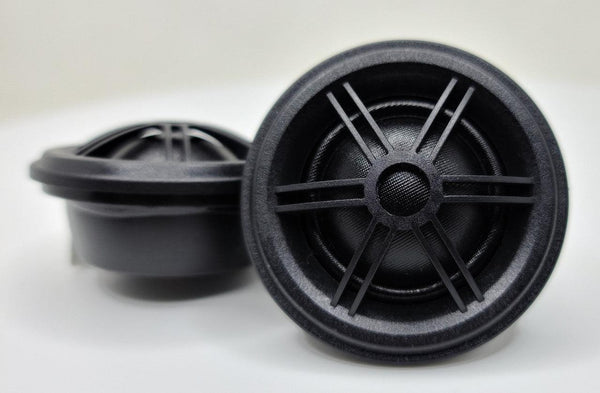 SHCA - TW1S Neo Silk Dome 1" VC Tweeter (Pair)Sky High Car Audio SH-TW1S 1.18" TweeterSold by Audiosellerz.com The Sky High Car Audio SH-TW1S 1.18" Tweeter is craf...$55.95
 -
 SHCA - Pro Audio TW2S Neo 1.3" VC Bullet Tweeter 4 ohm (Single Speaker)Sky High Car Audio SH-TW2S 1.3” VC Super Bullet Tweeter – 320 Watts Peak, 4 OhmSold by Audiosellerz.com Key Features:...$59.95


Sky High Car Audio Tweeters for Cleaner Highs, Sharper Detail & Louder Mids and Highs
Sold by AudioSellerz.com
Sky High Car Audio tweeters are made for customers who want cleaner highs, sharper musical detail, clearer vocals and a more complete car audio system.
If your music sounds dull, muddy, closed-in or buried behind the bass, the high-frequency side of the system may need attention. A strong subwoofer setup can expose weak factory speakers quickly. The bass may hit hard, but the music can still sound unfinished when the vocals, cymbals, percussion and upper-frequency detail cannot keep up.
This collection includes Sky High tweeters for daily-driver upgrades, louder mids-and-highs systems, factory tweeter replacement, custom doors, sail panels, dash locations and A-pillar builds.
Browse the Sky High tweeters on this page, compare the complete Sky High Car Audio speaker lineup, or build a complete front stage with Sky High midrange speakers and Sky High midbass speakers.
Plan the complete front stage: Tweeters should be matched with the midrange or full-range speakers, crossover protection, amplifier power, mounting location and final tuning. The loudest tweeter is not automatically the best tweeter for every system.
Why Upgrade to Sky High Car Audio Tweeters?
Factory tweeters are often one of the weaker parts of a vehicle’s audio system.
Some vehicles use small factory tweeters that provide limited output. Other vehicles may have no separate tweeter at all. A factory tweeter can also become harsh, distorted, weak or damaged as it ages.
These limitations become more noticeable when you add:
- Aftermarket door speakers
- Midrange speakers
- Midbass speakers
- A multi-channel amplifier
- A louder subwoofer system
- Custom door panels
- A DSP or active crossover setup
Sky High tweeters can help bring the upper end of the music back into the system so the sound feels more open and better balanced.
A tweeter upgrade may help provide:
- Cleaner high frequencies
- Sharper musical detail
- More vocal presence
- Better cymbal and percussion clarity
- A stronger front stage
- More top-end output
- Better balance with midrange and bass
- Highs that can keep up at louder volume levels
Tweeters do not replace midrange or midbass speakers. They complete the upper part of the system while the other speakers handle the body, punch and weight of the music.
What Do Tweeters Do in a Car Audio System?
Tweeters reproduce the highest frequencies in the music.
They are responsible for much of the brightness, sparkle, air and fine detail that larger speakers may not reproduce as effectively.
Tweeters help reproduce:
- Cymbals
- High percussion
- Upper vocal detail
- Strings and instrument texture
- Brightness and openness
- Front-stage height
- Fine musical detail
A car audio system can be extremely loud and still sound dull when the tweeters are weak or missing.
A properly installed tweeter should add clarity without becoming painful, sharp or distracting. The goal is not to overpower the rest of the music. The goal is to help the high frequencies blend naturally with the midrange, midbass and subwoofer system.
Our guide comparing full-range speakers, midrange speakers, midbass speakers and tweeters explains the job each type of speaker performs.
Sky High Tweeters for Daily-Driver Sound Upgrades
Not every tweeter upgrade needs to be part of a large custom build.
Many customers simply want their daily driver to sound clearer and more enjoyable. If the factory tweeters are weak, blown, missing or harsh, adding a properly installed Sky High tweeter can improve the top end without rebuilding the entire vehicle.
A daily-driver tweeter upgrade may be a good fit when you want:
- Better highs at normal listening levels
- Clearer vocals during everyday driving
- More detail from factory-style mounting locations
- A stronger front stage
- A less dull or closed-in sound
- Better balance after upgrading the door speakers
Daily-driver systems often benefit from a clean and balanced approach. One properly placed pair of tweeters with correct crossover protection may sound better than several tweeters installed only to create maximum output.
Sky High Tweeters for Louder Mids-and-Highs Builds
Tweeters become even more important as the rest of the system becomes louder.
When multiple midrange speakers, midbass drivers and subwoofers are added, the high-frequency section must have enough output to remain present without becoming harsh.
Sky High tweeters can be used in louder builds with:
- Upgraded door speakers
- Multiple midrange speakers
- Dedicated midbass speakers
- Custom speaker doors
- Aftermarket speaker amplifiers
- A-pillar or sail-panel mounting
- DSP-controlled front stages
- Strong subwoofer output
A loud speaker system needs balance. The bass, midbass, midrange and highs should work together instead of competing with one another.
If the bass is overpowering the vocals and music, the system may need more than tweeters alone. It may need stronger midrange speakers, midbass support and an appropriately matched amplifier.
Customers building a louder Sky High speaker system can compare Sky High Car Audio amplifiers or browse the wider selection of 4-channel amplifiers for mids and highs.
Sky High Tweeters for Factory Tweeter Replacement
Many vehicles include factory tweeters, but a factory-installed tweeter is not automatically the right match for an upgraded car audio system.
A factory tweeter may become the weak point when:
- The factory highs sound dull or weak
- The tweeter is blown or distorted
- The door speakers have been upgraded
- An aftermarket amplifier has been added
- The subwoofer system overpowers the front speakers
- The customer wants more detail and clarity
Before replacing a factory tweeter, check:
- The available mounting space
- The factory opening and grille clearance
- The original wiring
- Whether a factory crossover or capacitor is present
- The new tweeter’s impedance
- How the tweeter will be filtered
- Whether custom mounting adapters are required
- Whether the factory radio or an aftermarket amplifier will power it
Do not assume a new tweeter can be connected directly to every factory tweeter wire. Some factory systems use built-in equalization, separate amplifier channels or unusual crossover arrangements.
Sky High Tweeters for Custom Doors, Sail Panels and A-Pillars
Custom tweeter placement gives builders more control over output, aiming and front-stage height.
Common tweeter mounting locations include:
- Factory tweeter locations
- Sail panels
- Dash corners
- A-pillars
- Custom door panels
- Kick panels
Factory locations are normally easier to install and keep the vehicle looking more original. Custom locations may provide better control in systems where output and imaging are a higher priority.
When planning a custom tweeter location, consider:
- How the tweeter will aim toward the listener
- How close it will be to each ear
- How it will blend with the midrange speakers
- Whether the opposite-side tweeter will be blocked
- How the location affects brightness and harshness
- Whether the panel is strong enough to support the tweeter
- Whether the installation can be serviced later
- How the wire will be routed safely
High frequencies are directional, so small placement changes can make a noticeable difference.
A tweeter aimed directly at the listener may sound more aggressive than the same tweeter aimed across the cabin or reflected from the windshield. The best approach depends on the tweeter, vehicle, speaker layout and desired sound.
Why Tweeter Placement Matters
Tweeter placement affects more than volume.
It can change:
- Front-stage height
- Perceived detail
- Brightness
- Harshness
- Left-to-right balance
- How clearly the vocals appear in front of the listener
- How well the tweeter blends with the midrange speaker
High frequencies are easier for the ears to locate than deep bass. That means the tweeter location can strongly influence where the music appears to come from.
A well-planned front stage should make the music feel like it is coming from in front of the listener instead of only from the lower doors, rear deck or trunk.
Before permanently cutting an A-pillar or custom door panel, temporary tweeter placement can help identify positions that sound promising.
Sky High Tweeters and Vocal Clarity
If vocals sound muffled, buried or difficult to understand, the system may be missing upper-frequency detail.
Tweeters help reproduce the brightness and definition that make vocals feel clearer and more present. They do not create the complete vocal range by themselves, but they help finish the upper edge of the voice.
A strong vocal system usually combines:
- Midrange speakers for the main body of the vocals
- Midbass speakers for punch and lower-frequency weight
- Tweeters for upper detail and brightness
- Correct crossover overlap
- Balanced amplifier levels
- Clean source signal and tuning
If the system has plenty of bass but not enough voice, start by evaluating the entire front stage instead of turning only the tweeters up.
Matching Sky High Tweeters With Midrange Speakers
Tweeters and midrange speakers work together to create the main vocal and detail range of the system.
The midrange speaker handles much of the voice and instrumentation, while the tweeter adds the high-frequency detail on top.
When matching tweeters with Sky High midrange speakers, consider:
- The output level of the midrange speakers
- The number of mids being used
- The impedance on each amplifier channel
- The tweeter mounting location
- The crossover point for both speaker types
- Whether the system is passive or active
- How much tweeter output is actually needed
- Whether amplifier or DSP level control is available
A system with several loud midrange speakers may need more high-frequency output than a simple two-speaker daily-driver setup.
However, adding tweeters without correct filtering and level control can make the system louder but less enjoyable to listen to.
Matching Sky High Tweeters With Midbass Speakers
Midbass speakers and tweeters play very different frequency ranges, but both are important to a complete front stage.
Midbass provides punch, weight and impact from the front of the vehicle. Tweeters provide brightness, detail and top-end clarity.
If the system has deep subwoofer bass and bright tweeters but no strong midbass, the music can feel disconnected. It may sound like all lows and highs with very little energy between them.
Adding properly installed Sky High Car Audio midbass speakers can help create a smoother transition between the subwoofer stage and the midrange speakers.
Midbass performance also depends heavily on strong baffles, sealed doors, sound deadener, amplifier power and correct crossover settings.
Matching Sky High Tweeters With Full-Range Speakers
Some full-range and coaxial speakers already reproduce part of the high-frequency range. Adding separate tweeters may still help, but the system must be tuned so the high frequencies do not overlap excessively.
Too much overlap can create:
- Harsh highs
- An overly bright sound
- Uneven frequency response
- Listening fatigue
- A front stage that pulls toward the closest tweeter
Before adding tweeters to Sky High full-range speakers, confirm what frequency range the existing speakers are already covering and whether separate tweeters are needed for the goal.
Sky High also offers coaxial speaker options with an integrated tweeter, including the Sky High SH-P6 6.5" coaxial midrange speaker with a bullet tweeter and the Sky High SH-P69 6x9" coaxial midrange speaker with a bullet tweeter.
Bullet Tweeters vs Dome-Style Tweeters
Sky High offers different tweeter styles for different types of systems.
Sky High Bullet Tweeters
Bullet-style tweeters are commonly selected for louder mids-and-highs systems, custom doors and installations where stronger projection is part of the goal.
The Sky High SH-PROTW1 mini bullet tweeter pair is a compact 4 ohm option for customers building a dedicated high-frequency section.
The Sky High SH-PROTW1B mini bullet tweeter is another option for custom and higher-output installations.
Sky High Dome-Style Tweeters
A dome-style tweeter may appeal to customers who want a different installation approach from a bullet-style design.
The Sky High SH-TW1S neo silk-dome tweeter pair gives daily-driver and custom-system customers another way to complete the high-frequency section.
The correct option depends on the mounting space, desired output, other speakers, amplifier power and tuning plan.
Do Sky High Tweeters Need an Amplifier?
Some simple tweeter upgrades may be powered from an existing radio or speaker circuit when the equipment and wiring are compatible.
Many upgraded systems perform better with properly matched amplifier power, especially when the customer wants louder highs, custom doors or a front stage that can keep up with strong bass.
An amplifier may be worth considering when:
- You are building louder mids and highs
- Multiple tweeters are being installed
- The tweeters must keep up with several midrange speakers
- The system includes custom doors
- A DSP or active crossover will control the speakers
- You want better level and crossover control
- The factory radio cannot provide enough clean output
More amplifier power is not automatically safer or better. Tweeters can be damaged by excessive gain, clipping, incorrect impedance or crossover settings that allow them to play too low.
When selecting an amplifier, compare 4-channel car audio amplifiers and confirm the power available at the impedance of the complete speaker load.
Do Sky High Tweeters Need Crossovers?
Yes. Tweeters need proper crossover protection.
A tweeter is not designed to reproduce bass or lower midrange frequencies. Sending frequencies that are too low can create distortion, harshness, excessive movement, heat and possible tweeter failure.
Tweeters may be protected through:
- Passive crossovers
- Inline capacitors or filters designed for the tweeter
- Amplifier high-pass crossover settings
- Head-unit crossover settings
- DSP crossover settings
The correct method depends on the tweeter, amplifier, number of speakers, wiring configuration and whether the system is passive or active.
A crossover helps provide:
- Tweeter protection
- Cleaner high-frequency output
- Better blending with the midrange speakers
- Less harshness
- Better control over the front stage
- A more balanced finished system
Important: Do not install or test tweeters without understanding how low frequencies are being blocked. One incorrect crossover setting can damage a tweeter very quickly.
Use our car audio speaker tuning guide for midrange, midbass and tweeters when planning crossover points, amplifier levels and final system balance.
Setting Amplifier Gain for Tweeters
Amplifier gain is not a volume control.
The gain setting matches the amplifier’s input sensitivity to the signal coming from the radio, line-output converter or DSP.
Too much gain can make tweeters:
- Sound harsh or scratchy
- Clip at higher volume
- Become excessively loud compared with the mids
- Heat up
- Fail prematurely
Begin with conservative settings. Make sure the crossover protection is active before increasing output, and balance the tweeters with the rest of the front stage instead of tuning them by themselves.
Our complete guide on setting amplifier gain for subwoofers, mids and highs explains how to establish a cleaner starting point.
Sky High Tweeters for Systems With Subwoofers
Subwoofers strengthen the low end, but they can also reveal every weakness in the front speakers.
If the subwoofer stage is much stronger than the highs, the system may sound impressive on bass notes but muddy or unclear through the rest of the music.
Adding properly matched tweeters can help provide:
- More detail above the bass
- Clearer vocals
- Better balance at higher volume
- A stronger front stage
- Less dullness when the subwoofers are playing hard
Tweeters alone will not fix a weak front stage when the midrange speakers are also being overpowered. A complete upgrade may require midrange speakers, midbass, a speaker amplifier and better tuning.
Sky High Tweeters vs Factory Tweeters
Factory tweeters are normally designed around the original radio, factory amplifier and stock speaker system.
They can work acceptably in a completely stock vehicle, but they may become the limitation when the rest of the system is upgraded.
A factory tweeter is usually intended for:
- Basic factory listening
- Lower power
- Factory mounting and crossover arrangements
- The original vehicle speaker system
Sky High tweeters are intended for customers who want:
- Cleaner and stronger highs
- Better top-end presence
- A tweeter that fits an aftermarket speaker build
- More output for mids-and-highs systems
- Custom mounting options
- Highs that can keep up with upgraded bass and mids
The right upgrade still depends on the complete system. A poorly filtered or badly aimed aftermarket tweeter can sound worse than a properly functioning factory tweeter.
Choosing the Right Sky High Tweeter Setup
Simple Daily-Driver Tweeter Upgrade
This setup is for customers who want better detail without a major custom build.
- Replace weak or damaged factory tweeters
- Use factory or simple mounting locations where practical
- Use proper crossover protection
- Keep the level balanced with the door speakers
- Confirm compatibility with the factory or aftermarket power source
Louder Mids-and-Highs Setup
This setup is for customers who need the tweeters to keep up with louder midrange speakers, midbass and subwoofer output.
- Pair the tweeters with strong midrange speakers
- Use clean amplifier power
- Set the crossover safely
- Balance the tweeter level with the mids
- Use a DSP or amplifier controls when more tuning control is needed
- Avoid making the highs painful simply to make them loud
Custom Door or A-Pillar Setup
This setup is for customers who want more control over front-stage placement and output.
- Plan the tweeter angle before permanent mounting
- Test the location when possible
- Route the speaker wire safely
- Blend the tweeter with the nearest midrange speaker
- Use level control to correct left-to-right differences
- Tune the system for clarity instead of maximum harshness
Signs You May Need Better Tweeters
You may need a tweeter upgrade when:
- The music sounds dull or closed-in
- The highs are missing
- Vocals lack detail
- The factory tweeters are blown or distorted
- The system has strong bass but very little clarity
- The door speakers sound flat
- The highs cannot keep up with the midrange speakers
- The system becomes muddy at higher volume
- The speaker system sounds loud but unfinished
Before replacing the tweeters, make sure the issue is not caused by bad crossover settings, poor equalization, damaged wiring, excessive gain or a weak source signal.
What to Check Before Buying Sky High Tweeters
Before ordering, confirm:
- Where the tweeters will be mounted
- How much mounting depth and diameter are available
- Whether you are replacing factory tweeters or adding new locations
- Whether custom brackets or panels are needed
- The tweeter impedance
- The number of tweeters being connected
- The final load presented to the amplifier
- How the tweeters will be crossed over
- Whether they will be powered by a radio, amplifier or DSP
- How they will match with the midrange or full-range speakers
- Whether separate level control is available
- Whether the system will need professional tuning after installation
The best tweeter upgrade is not automatically the biggest or loudest option. It is the tweeter that fits the available space, receives clean power, remains protected from low frequencies and blends with the rest of the speaker system.
What to Buy With Sky High Tweeters
A complete tweeter installation may also need:
- Sky High midrange speakers
- Sky High midbass speakers
- Sky High full-range speakers
- A properly matched 4-channel amplifier
- Sky High speaker wire and installation wiring
- Passive crossovers, capacitors or DSP filtering appropriate for the tweeters
- Mounting cups, brackets or custom panels
- Sound deadener and secure speaker baffles for the rest of the door system
Browse the complete Sky High Car Audio collection when planning amplifiers, wire, speakers, subwoofers and electrical products around one build.
Why Buy Sky High Car Audio Tweeters From Audio Sellerz?
Audio Sellerz is a real car audio shop—not simply a website listing random products.
We sell car audio equipment, install systems and help customers understand how the tweeters, mids, midbass, amplifiers, wiring, crossovers and subwoofers work together.
That matters because tweeters are not only about adding more volume. They are about:
- Sound balance
- Placement
- Clarity
- Crossover protection
- Amplifier matching
- Level control
- Blending with the rest of the speaker system
Audio Sellerz carries Sky High tweeters for daily-driver upgrades, factory replacements, custom doors, A-pillars and louder mids-and-highs builds.
Our complete Sky High Car Audio guide explains how the tweeters fit with Sky High wire, amplifiers, midrange speakers, midbass, subwoofers and electrical products.
Frequently Asked Questions About Sky High Car Audio Tweeters
Are Sky High Tweeters Good for Daily Drivers?
Yes. Sky High tweeters can be used in daily drivers that need cleaner highs, sharper detail and more vocal clarity than the current speaker system provides.
A daily-driver upgrade should remain properly filtered and balanced so the highs sound clear without becoming harsh.
Will Sky High Tweeters Make My System Louder?
They can help the high-frequency range play stronger and more clearly.
The amount of improvement depends on the existing tweeters, amplifier power, crossover settings, placement and the output of the rest of the speakers.
Do I Need Tweeters if I Already Have Door Speakers?
Maybe.
Some door speakers already reproduce high frequencies or include an integrated tweeter. Other midrange and midbass speakers are not intended to cover the complete high-frequency range.
Dedicated tweeters may help when the current system lacks detail, brightness or front-stage height.
Do Tweeters Help Vocals?
Yes. Tweeters help reproduce the upper detail and brightness in vocals.
They do not replace midrange speakers, but they can help the vocals sound clearer and more present.
Can Tweeters Be Too Loud?
Yes. Tweeters can become harsh or painful when they are too loud, crossed too low, aimed poorly or not balanced with the rest of the system.
The goal is clean high-frequency detail—not maximum brightness at all costs.
Do Sky High Tweeters Need a Crossover?
Yes. Tweeters need crossover protection to prevent low frequencies from reaching them.
The protection may come from a passive crossover, inline filter, amplifier, radio or DSP depending on the installation.
Where Should Tweeters Be Mounted?
Common locations include factory tweeter locations, sail panels, dash corners, A-pillars, custom doors and kick panels.
The best location depends on the vehicle, desired front stage, mounting space and how the tweeter blends with the other speakers.
Are Sky High Tweeters Good for Custom Doors?
Yes. Sky High tweeters can be used in custom doors where stronger high-frequency output and better detail are needed.
They should be matched with the correct midrange speakers, amplifier, crossover setup and level control.
Will Tweeters Help if My Bass Is Overpowering My Speakers?
Tweeters can help bring top-end detail back into the system.
If the vocals and middle frequencies are also weak, the system may need upgraded midrange speakers, midbass and amplifier power—not only more tweeters.
Can I Connect Multiple Tweeters to One Amplifier Channel?
Multiple tweeters may be connected to one channel only when the wiring creates an impedance the amplifier can handle and each tweeter receives proper crossover protection.
Calculate the final load before making the connection. Do not keep adding tweeters without checking impedance and available amplifier power.
Do Tweeters Need Speaker Wire?
Yes. Use clean, properly sized speaker wire and secure connections.
Protect the wire anywhere it passes through metal, doors, A-pillars or moving vehicle panels.
Why Do My Tweeters Sound Harsh?
Common causes include:
- Excessive amplifier gain
- A crossover point that is too low
- Too much equalizer boost
- The tweeters being aimed too directly at the listener
- Too many tweeters for the rest of the system
- A clipped source or amplifier signal
- Poor level matching with the midrange speakers
Why Did My Tweeter Stop Playing?
Possible causes include damaged wiring, a failed crossover component, excessive power, clipping, incorrect impedance or low frequencies reaching the tweeter.
Turn the system off and test the wiring and crossover before connecting a replacement tweeter.
Shop Sky High Car Audio Tweeters at Audio Sellerz
Browse this collection for Sky High Car Audio tweeters made for cleaner highs, sharper detail, clearer vocals, factory tweeter replacement, custom doors, A-pillars, daily-driver upgrades and louder mids-and-highs systems.
Pair the tweeters with the right midrange speakers, midbass drivers, amplifier, crossover settings, speaker wire and tuning so the high frequencies complement the system instead of overpowering it.
Dealers, installers and car audio shops interested in Sky High Car Audio tweeters and other available wholesale product lines can learn more through the Audio Resellerz dealer portal.
Follow Audio Sellerz
Follow Audio Sellerz for Sky High Car Audio products, speaker builds, custom doors, tweeter and crossover advice, amplifier tuning, subwoofer demos, event coverage and behind-the-scenes content from our team.
Follow Audio Sellerz on Facebook
Follow Audio Sellerz on Instagram